Brenny Alcantara, Environmental Science Undergrad ’27
My impressions of COP31 so far, both in the blue and green zone, are similar to what I had predicted. Prior to attending COP31, I participated in an interview in which they asked me what I expected to see during the event. I shared that I did not expect to see much action or collaboration beyond wordy agreements and shaky pledges. That because the global order which heads the event, the United Nations—a hegemonic organization that perpetuates the exploitation of the global south from the global north—is vested in the interest of capitalist expansion, we would not see any significant progress, from a policy standpoint, since environmental change, one of which would truly solve the issue of climate, rather than mere symptoms, is inextricably opposed to their interest. Furthermore, I had shared that it would primarily focus on technical solutions to an end. It has been exactly this. Throughout my time in the Blue Zone and Green Zone, I have been plastered with technical solutions towards adapting to climate change. Yet, nothing that goes beyond overhauling the confounding factor itself.
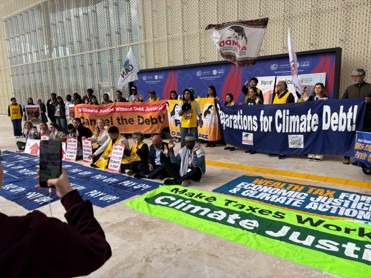
Aside from disillusionment, my favorite part of COP31 has been the protests lead by organizers, indigenous groups, and the youth. Collective action critiquing economic models such as neoliberalism and capitalism and exploitative efforts such as colonialism and imperialism while tying them to environmentalism has been, without a doubt, the most complete understanding of environmental issues and climate change I have seen—at this event. Furthermore, their efforts in contrast to the bureaucratic structure of environmental reformism have stood out as, not only more serious, but caring and powerful. Due to this, and various other reasons, I am even more confident that collective action and anti-imperialist theory are the main weapons that the global working class has in hand to combat against the greatest force of our era; capitalism.