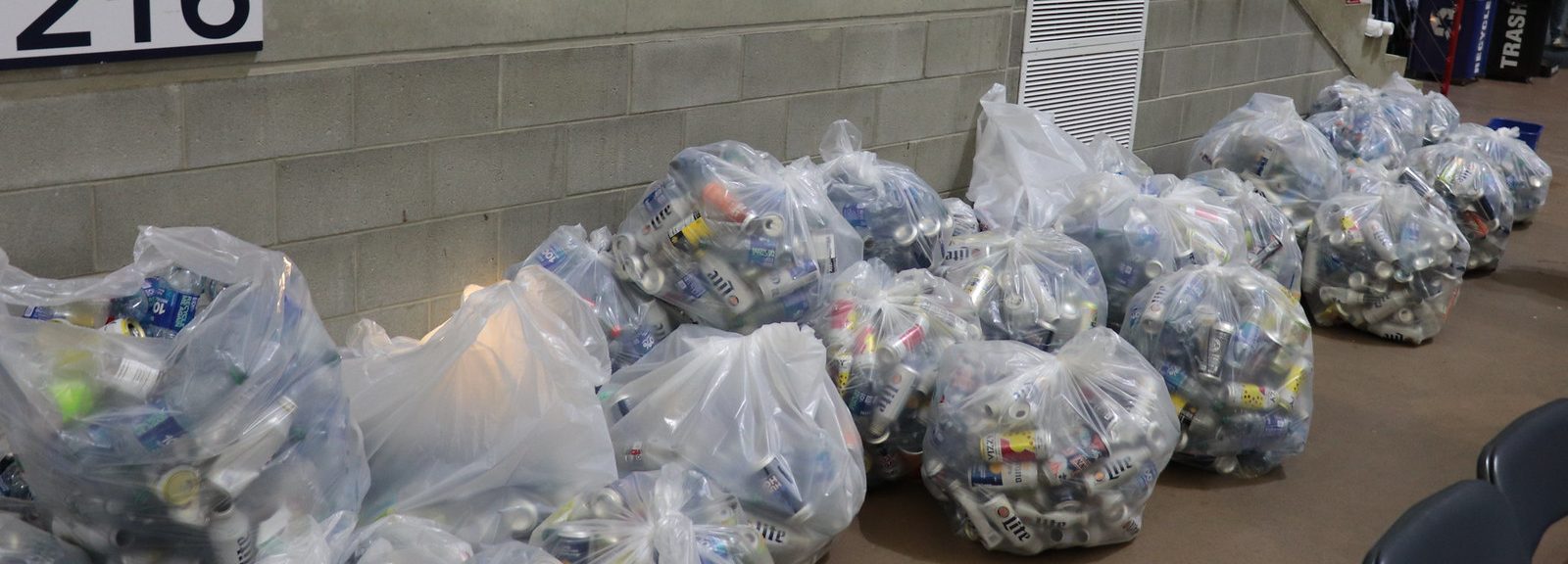
Waste and Recycling
Reducing our environmental pawprint
UConn takes a comprehensive approach to waste reduction, placing emphasis on responsible consumption as an operational priority. Through campus-wide recycling infrastructure, food waste diversion, composting, and donation programs, the University works systematically to minimize its contribution to landfills. These efforts are grounded in formal frameworks and aligned with both STARS Operations credits and UN SDG targets, underscoring UConn's broader commitment to sustainable stewardship across all aspects of campus life.
Sustainability Frameworks
UConn's waste and recycling operations are guided by sustainability frameworks that encompass procurement, materials management, and waste recovery, earning recognition across several AASHE STARS Operations credits (2024). Working alongside several campus partners, the Office of Sustainability contributes to waste management practices that advance several UN SDG targets, reflecting UConn's institutional commitment to reducing our environmental paw print at every level of campus operations.
Operations (OP)
Procurement & Waste credits
Waste & Recycling Initiatives at UConn
UConn's waste and recycling initiatives cover the full lifecycle of materials on campus, from everyday recycling and responsible e-waste disposal to food waste diversion, sustainable dining, and sustainable construction standards. Through operational partnerships, campus-wide competitions and engagement events, community outreach, and formal policy, the University works to reduce the amount of waste it generates, recover value for what remains, and encourage a culture of environmental responsibility across the UConn community.

Recycling Guidelines
Not sure what you can and can't recycle? Read below for general guidelines on proper home recycling practices from RecycleCT. All recycled items should be empty, clean, open, and dry - don't bag them! Some items listed below may not be put in your regular home/dorm recycling bin, but can be dropped off at dedicated collection points to be recycled. Check out our more in-depth recycling guidelines or the RecycleCT Wizard and their extensive list of less common items with guidelines for how to properly dispose of them.
Recycle!
- Cardboard and boxboard
- Food and beverage cartons
- Office paper
- Junk mail, magazines and newspapers
- Pizza boxes
Do not recycle:
- Gift wrap, gift bags, and tissue paper
- Ice cream containers
- Paper cups (hot or cold)
- Shredded paper
- Take-out food containers
Recycle!
- Bottles (with or without caps)
- Containers, tubs, and lids
- One-use cups (no lids or straws)
Do not recycle:
- Black plastic trays and containers
- Loose bottle caps
- Plastic bags and plastic wrap
- Plastic plates, bowls, and utensils
- Prescription bottles
- Single-use coffee containers
- Styrofoam
- Water filters
Recycle!
- Food-grade aerosol containers
- Aluminum foil
- Metal cans and bottles
- Metal can/bottle lids
- Foil containers
Do not recycle:
- Other aerosol containers (cleaners, air fresheners, etc.)
- Foil tops from yogurt containers
- Paint cans
- Pots and pans
- Scrap metal
Recycle!
- Food or beverage bottles and jars
Do not recycle:
- Drinking glasses
- Ceramic mugs and plates
Don't forget:
- Recyclables should be empty and clean.
- Bagged recycles cannot be sorted! If you collect your recyclables in a bag, make sure to empty the bag into the recycling bin.
- If you aren't sure if an item is recyclable, it is better to throw it in the trash.
- Recycling is important, but reducing consumption and waste production and/or reusing items can be even more impactful than proper recycling.

Waste Minimization and Management
In accordance with the University's sustainability goals, the Office of Sustainability engages with the UConn community to promote waste minimization and proper waste management through a range of campus events and initiatives. Campus-wide competitions in the fall and spring encourage sustainable habits in thousands of residential students each year, including reducing water and electricity use and following recycling guidelines. Beyond campus, the OS partners with the Town of Mansfield in the fall and spring for a community-wide cleanup that connects UConn students with the surrounding community in shared environmental stewardship.
Food Waste
All of UConn's dining hall food waste is transformed into compost energy through a partnership between UConn Dining Services and Quantum Organics. Using an anaerobic digester, Quantum Organics breaks down food waste into methane, which is captured and used as a biofuel to power local municipal buildings. The partnership with Quantum was piloted in 2017 and ultimately expanded campus-wide.
Beyond the dining halls, UConn Dining Services champions a range of sustainable dining initiatives, including trayless dining to promote mindful dining, partnering with Community Outreach to distribute unusued food, promoting reusable containers and mugs in place of single-use plastics across campus, and recycling cooking oil into biodiesel.

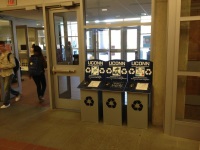
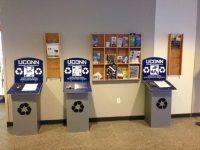
Electronic Waste (E-Waste)
Electronic waste ("E-waste") consists of damaged or discarded electronic devices and associated materials. E-waste items should not be disposed of in the normal trash due to their high concentrations of toxic chemicals and heavy metals. Examples of e-waste include rechargeable batteries, toner and ink cartridges, cell phones and chargers, iPods, MP3 players, televisions and computers. Campus collection points for electronic waste include:
- UConn Bookstore, South Parking Garage entrance
- Homer Babbidge Library, west entrance
- Student Union, Fairfield Way entrance
For larger items, contact the Central Warehouse to schedule a pickup. For more information about the disposal of hazardous waste, including lab waste, read the regulated waste management guidelines from Environmental Health and Safety (EHS).
Construction Waste
The Sustainable Design and Construction Policy, first adopted in 2007, requires any building project (across all campuses) over $5 million to pursue LEED Gold certification at minimum, which includes criteria for responsible materials management and waste diversion. UConn's LEED Gold projects, such as the Science 1 building completed in 2023, have diverted more than 50% of construction and demolition waste from landfills. By ensuring that sustainability is built into the design and construction process from the start, UConn aims to minimize the environmental impact of a continually growing physical campus.


