Amelia Chien, Environmental Science and Natural Resources Undergrad ’28
When I first entered the COP31 convention center, I was immediately overwhelmed. Both by the beauty of the convention center that showcased the natural landscape of Antalya, Turkey, and the sheer amount of people from all over the world. Never have I ever been in a room with so many people from such a diverse range of places. From the moment you enter the conference, you are wrapped in the sound of thousands of voices speaking in hundreds of languages, all about one single thing; climate change.
As we all know, climate change is a pervasive issue that touches every single person in the world, but in what way and to what extent is different for everyone. As an Environmental Science and Natural Resources major, climate change is always front of mind. There is never a moment of the day or a lesson in class that could not be or is not connected to our planet’s rapidly changing climate and the subsequent consequences. That being said, the majority of my climate related lessons and discussions are often quite negative, focusing on the current destruction our planet is facing and the disruption to key natural processes. Coming into COP31, I was curious to see if that sentiment was true at such a high international level and how people’s differing experiences affected their own personal views towards climate change action and adaptation.
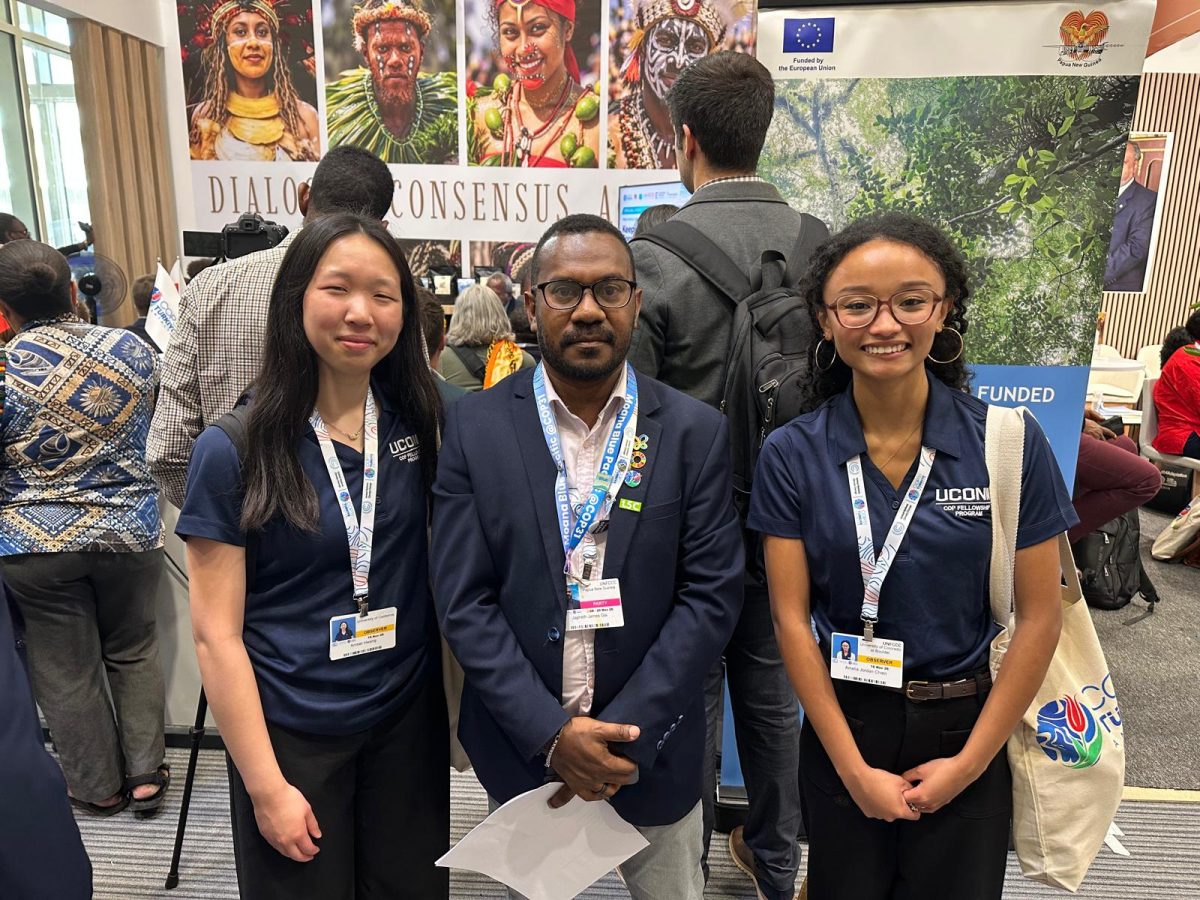 On my first day at COP31, along with my fellow fellowship participant Amber, I was greeted by Japheth Gai, an MRV Officer at Climate Change and Development Authority for Papua New Guinea. He approached as we were stretching our next, trying to get a glimpse into Papa New Guinea’s Pavillion for the panel entitled “ Keep Standing Forests Standing: Forests High-Integrity Jurisdictional REDD+”. The Pavillion was packed and Amber and I were trying our best to make out the screen on our tiptoes, when Japheth came up to us asking about how we were. He seemed so excited that there were people putting in effort to understand the current conditions in his small island country. He was so warm and welcoming as he explained what the panel was about and answered all of our questions thoughtfully.
Papua New Guinea was discussing its newfound partnership with an American brokerage company to provide climate credits to other nations in exchange for funds that would go towards reforesting degrades and areas and biodiversity remediation. His excitement about the opportunity was palpable and his confidence in the good it would bring to his country was the most genuine joy I had seen at the conference up until that point. In class, I had learned about carbon credits numerous times, but often from the perspective of greenwashing and rich countries shunning responsibilities. This was the first time that I had ever heard someone speak about them in a wholly positive light and his enthusiasm was nearly contagious. My conversation with Jahpheth was my first incredibly direct experience of the opposing global viewpoints surrounding climate change action at COP31, of which there would be many more.
Today on my second day, I have already seen demonstrations and been given literature opposing the very thing Jahpeth was so excited about. The Australian Pavillion was strewn with fliers condemning the use of “charismatic species” and carbon credits to allow companies and countries to say they are greener than they actually are, claiming that they detrimentally affect Indigenous people, people like Jahpeth. Protesters with megaphones and bright banners were standing in front of the cafeteria, fighting against organizations who use the conservation of charismatic species of African and South America to disguise their own harmful actions.
While I believe the pros and cons of carbon credits is a complicated issue that challenges the interconnectedness between environmentalism, economics, and equitably, that is not what I wish to address today. What I took away from this is a real life example of the conflicting problems and solutions that impede our ability to make progress in the climate space. The beauty of our planet lies in the diversity of its ecosystems and people. Different countries have different needs, responsibilities, and capabilities and we must be able to find a way to accept and make allowances for each nation’s unique situation if we will ever have hope of succeeding in our fight against the climate crisis.