Amber Hwang, Environmental Studies and English Undergrad ’27
We began COP31 by learning the ridges of the land, exploring Türkiye’s Köprülü and Tazı Canyons. These first few days at the conference reminded me of an urban canyon: developed nations standing like the tall buildings that flank the path forward, obstructing the winds of consensus and implementation. As we navigate international climate negotiations and operationalizing the Belém-Antalya Mechanism, I find myself paying attention to whose voices move through the canyons.
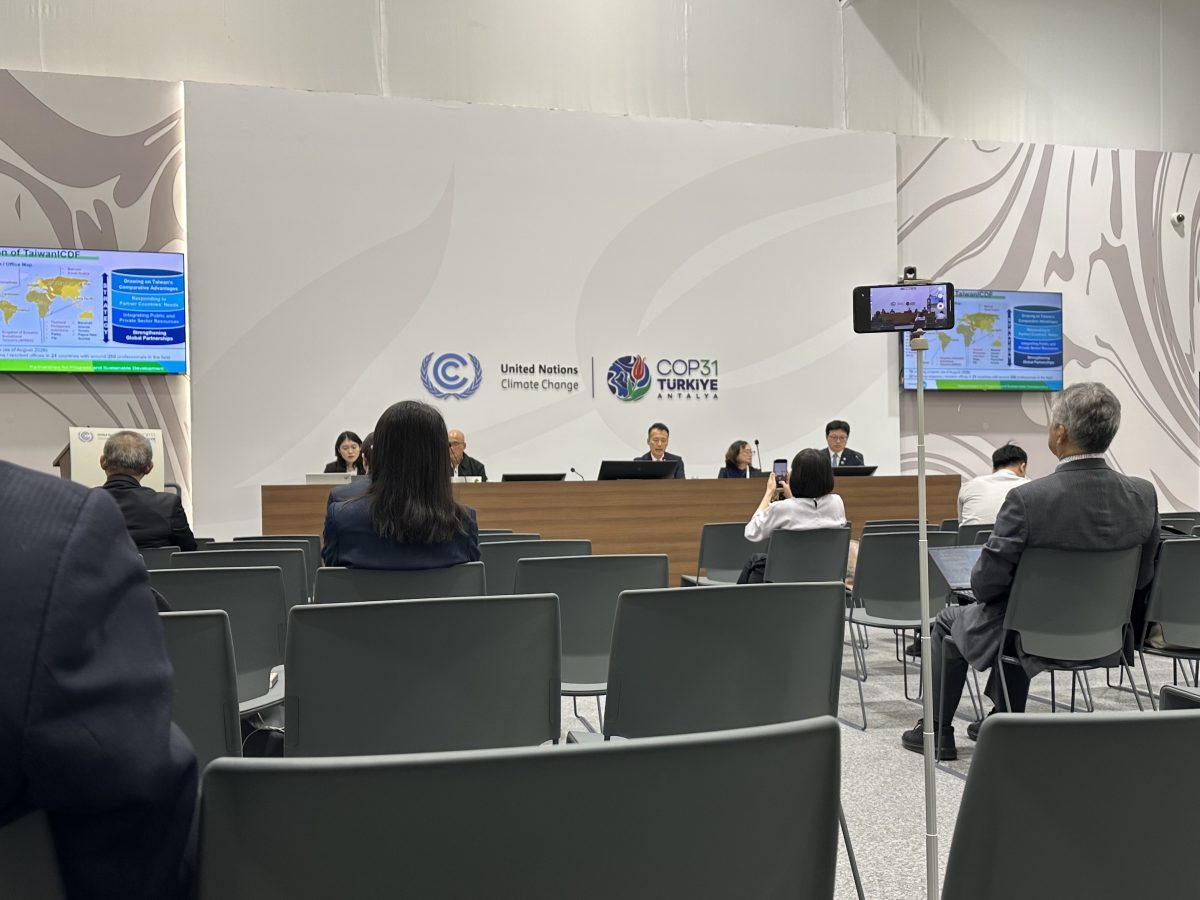 I have been looking forward to engaging with how Small Island Developing States (SIDS) are represented at COP as their existence remains threatened by every fraction of a degree of warming, while most developed countries are not contributing their fair share to climate finance. At one side event that left a strong impression on me, “Delivering Climate Commitments: Turning NDCs into Action for Small Island States,” representatives from the Marshall Islands and the Taiwan Research Institute (TRI) discussed the frontline realities of climate change for various island states and the climate financing partnerships that they have engendered.
The TRI delegates spoke about building permanent partnerships with Pacific Island states rooted in the Pabjelmae spirit, explained as preparing for unforeseen circumstances in this case through interconnections between islands. Among initiatives discussed was training women to maintain solar panels, alongside grants and efforts to overcome investment barriers. The initiatives seemed promising, though I could speculate about the balance between external expertise and the knowledge and agency of women, Indigenous Peoples, and local communities.
Taiwan’s history of colonialism and shift from a developing economy made its engagement with SIDS intriguing to learn about. Without a seat at the UN, Taiwan faces barriers to participating in multilateral climate finance platforms but seems to have pursued alternative avenues through regional efforts including the Asian Development Bank.
At the same time, to what degree were the initiatives discussed addressing the root causes of climate change beyond parts of the conversation on adaptation and low-carbon transitions for local economies? Some of the language around port electrification reminded me of one of our Breakfast Club points of discussion surrounding electrification versus decarbonization.
I also wondered whether the Marshall Islands could have had greater representation in the panel. At a conference where fossil fuel lobbyists eclipse the combined delegations of the most climate-vulnerable nations, many voices seem sidelined despite the goals of the Just Transition Mechanism.
Continuing to engage with other pavilions and plenaries for the rest of the week, my mind wanders back to our cohort collectively paddling along turquoise arpeggios of the Köprüçay River during our first full day in Antalya, as we await rivers of international climate action to make their way through the canyons of COP31 negotiations.