Web cookies (also called HTTP cookies, browser cookies, or simply cookies) are small pieces of data that websites store on your device (computer, phone, etc.) through your web browser. They are used to remember information about you and your interactions with the site.
Purpose of Cookies:
Session Management:
Keeping you logged in
Remembering items in a shopping cart
Saving language or theme preferences
Personalization:
Tailoring content or ads based on your previous activity
Tracking & Analytics:
Monitoring browsing behavior for analytics or marketing purposes
Types of Cookies:
Session Cookies:
Temporary; deleted when you close your browser
Used for things like keeping you logged in during a single session
Persistent Cookies:
Stored on your device until they expire or are manually deleted
Used for remembering login credentials, settings, etc.
First-Party Cookies:
Set by the website you're visiting directly
Third-Party Cookies:
Set by other domains (usually advertisers) embedded in the website
Commonly used for tracking across multiple sites
Authentication cookies are a special type of web cookie used to identify and verify a user after they log in to a website or web application.
What They Do:
Once you log in to a site, the server creates an authentication cookie and sends it to your browser. This cookie:
Proves to the website that you're logged in
Prevents you from having to log in again on every page you visit
Can persist across sessions if you select "Remember me"
What's Inside an Authentication Cookie?
Typically, it contains:
A unique session ID (not your actual password)
Optional metadata (e.g., expiration time, security flags)
Analytics cookies are cookies used to collect data about how visitors interact with a website. Their primary purpose is to help website owners understand and improve user experience by analyzing things like:
How users navigate the site
Which pages are most/least visited
How long users stay on each page
What device, browser, or location the user is from
What They Track:
Some examples of data analytics cookies may collect:
Page views and time spent on pages
Click paths (how users move from page to page)
Bounce rate (users who leave without interacting)
User demographics (location, language, device)
Referring websites (how users arrived at the site)
Here’s how you can disable cookies in common browsers:
1. Google Chrome
Open Chrome and click the three vertical dots in the top-right corner.
Go to Settings > Privacy and security > Cookies and other site data.
Choose your preferred option:
Block all cookies (not recommended, can break most websites).
Block third-party cookies (can block ads and tracking cookies).
2. Mozilla Firefox
Open Firefox and click the three horizontal lines in the top-right corner.
Go to Settings > Privacy & Security.
Under the Enhanced Tracking Protection section, choose Strict to block most cookies or Custom to manually choose which cookies to block.
3. Safari
Open Safari and click Safari in the top-left corner of the screen.
Go to Preferences > Privacy.
Check Block all cookies to stop all cookies, or select options to block third-party cookies.
4. Microsoft Edge
Open Edge and click the three horizontal dots in the top-right corner.
Go to Settings > Privacy, search, and services > Cookies and site permissions.
Select your cookie settings from there, including blocking all cookies or blocking third-party cookies.
5. On Mobile (iOS/Android)
For Safari on iOS: Go to Settings > Safari > Privacy & Security > Block All Cookies.
For Chrome on Android: Open the app, tap the three dots, go to Settings > Privacy and security > Cookies.
Be Aware:
Disabling cookies can make your online experience more difficult. Some websites may not load properly, or you may be logged out frequently. Also, certain features may not work as expected.
This past Tuesday marked the 44th annual Earth Day! Despite my original nervousness due to some uncertainty concerning the weather (it was, after all, a Tuesday in Storrs), I am happy to report that April 22nd was a gorgeous day on campus, which made UConn’s yearly Earth Day Spring Fling a fantastic success. Sun shined down over the thousands of students, faculty, community members, and environmental exhibitors, all gathered to celebrate sustainability.
From 11am to 2pm, vendors ranging from student organizations to state departments, NGOs to sustainable stores and businesses, all set up camp on Fairfield Way. They provided recycling games galore, scrumptious free samples, environmentally friendly products, and information on a wide variety of environmental issues and practices.
Appealing to the many music lovers out there, we were lucky enough to have Dave Wanik and Meredith Rose perform. Their beautiful acoustic compositions set the perfect background vibe for the chatter between curious attendees and knowledgeable table hosts, as well as diners drawn in by the aromas of grilling.
The mouthwatering zero-waste barbeque, provided by our good friends from Dining Services, proved just how delicious local and sustainable foods can be. Diners strolled down the line, choosing from hamburgers and hotdogs from Connecticut, vegan veggie burgers from New Jersey, vegetarian Italian sausage from Massachusetts, and more. By keeping menu items to this New England crew, we shortened each food’s journey to UConn, reduced our carbon footprint, and helped promote local businesses! Once finished with their meals, attendees headed over to our sustainable waste stations, where they learned which parts of their waste were compostable and recyclable.
Finally, thanks to the help of our intern, Andy Bilich, we were able to plant a Quercus alba (or white oak, for those of you who are like me and don’t understand Latin) next to the Student Union. The tree stands as a tribute to Arbor Day (which is today!), as well as an informal symbol for the university.
Overall, the event was a great one. If you didn’t get a chance to come out and celebrate with us this year, be sure to come check out Earth Day Spring Fling next year!
On March 31st, we held the third annual Climate Impacts, Mitigation, and Adaptation conference, known as CIMA 3. Faculty, staff, and students from all over campus attended the event to discuss climate adaptation and impact. The event helped kick off a month of environmental programming, ending with Earth Day Spring Fling on April 22nd.
The event was headed by a keynote address from the EPA Administrator for Region 1, Curt Spalding. Mr. Spalding spoke about the challenges facing New England with regards to climate change, and specifically severe weather events and sea level rise.
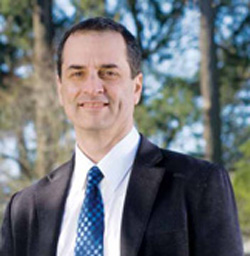
EPA Region 1 Administrator Curt Spalding. Photo by Eric Grulke
He focused on what the region was doing as a whole, but also how some local governments in New England are working proactively to better adapt to climate change and its effects. Mr. Spalding also talked about the need to frame the issue of climate change for local policy makers in order to make adaptation more of a priority for the New England towns.
Keynote Address Curt Spalding. Photo by Eric Grulke
After the keynote, a panel of UConn faculty from a variety of disciplines presented on the wide reaching impacts of climate change. Each faculty member discussed climate change impact in the context of a specific system. Included in this discussion were impacts on water resources, agriculture, human health, biota, infrastructure, economics, and political systems.
Faculty panelists Michael O’Neil, Mark Urban, and Carol Atkinson-Palombo (right). Photo by Eric GrulkeFaculty panelist Merrill Singer Photo by Eric Grulke
After an audience question and answer session with the panel, there was a networking lunch and poster session for the attendees. The posters represented some of the climate-related initiatives and research at the University of Connecticut. The relaxed atmosphere of the poster exhibition and lunch provided a unique opportunity for faculty, staff, and students to not only talk about the issue of climate change as a whole, but also what is being done at UConn.
Professor John Volin (left) and UConn students enjoy the Poster and Networking Lunch. Photo by Eric Grulke
The final session of the day was a closing presentation from Eban Goodstein – Director and Faculty, Center for Environmental Policy and Sustainability MBA at Bard College (Organizer of Power Shift, Focus the Nation and 350.org). Mr. Goodstein talked on the immediacy of needed action on climate change. In this talk, he focused on the current generation of students and how their actions will be pivotal in influencing the course of climate change over the next fifty years.
Eban Goodstein’s closing presentation. Photo by Eric Grulke
Overall the event was well received by the attendees. It provided an excellent forum for discussion on what needs to happen regionally, globally, and at the University of Connecticut going forward to adapt and respond to global climate change.
Do you have any old shoes you’d like to get out of your closet? Consider donating them during our UConn shoe drive! This year we are collecting all types of shoes (adults, children’s, boots, sneakers, heels, etc.) and donating them to the Salvation Army in Hartford. We would prefer that the shoes only be lightly used since they will be worn again. So bring your shoes, your friend’s shoes, your neighbor’s shoes or anyone’s to UConn by April 22nd and drop them off in one of our seven collection bins. Bins are located in the main lobbies of the Student Union, Co-op, Rec Center, Library, Hawley Armory, Rowe Center (CUE), and the AE&S building.
If you have questions please email katherine.e.kelleher@uconn.edu
With Earth Day and Arbor Day fast approaching, UConn recently learned that it is the first college in Connecticut and only the third school in New England to be named a Tree Campus USA by the Arbor Day Foundation. The University joins a group of almost 200 schools nationwide that have earned this distinction for their commitment to tree conservation and preservation.
This certification is given by the Arbor Day Foundation to university campuses that effectively:
Manage their campus trees
Develop connectivity with the community beyond campus borders to foster healthy urban forests
Strive to engage their student population utilizing service learning opportunities centered on campus and community forestry efforts
Pagoda Tree (Styphnolobium Japonicum) near Wilbur Cross. Photos by Mark Brand, UConn Plant Science Dept.Shingle Oak (Quercus Imbricaria) near Wilbur Cross. Photo by Mark Brand.
Former Vice Provost and emeritus EEB faculty member, Greg Anderson, co-chairs the UConn Arboretum Committee and was thrilled by this accomplishment. “This impressive recognition for UConn is gratifying. So many people for so many decades have worked to make the natural environment not only a handsome complement to the ever-improving built environment on our campus, but also an effective way to frame the landscape and a useful tool for educating our students and others about a diversity of tree species.” The Arboretum Committee’s website includes a Campus Tree Touring Guide to 40 different special trees that can be seen on a leisurely walk around the main campus. “It’s great to see the long-term and ongoing commitment by so many students, staff and faculty be recognized in this way.”
A Camperdown Elm (Ulmus glabra Camperdownii) on the Great Lawn. Photo by Mark Brand
The Tree Campus designation has five components. The first is a Tree Advisory Committee – the UConn Arboretum Committee fulfills this requirement. The second component of Tree Campus USA is a campus tree care plan. This plan contains information for planting, maintenance, prohibited practices, as well as goals for campus tree preservation. UConn’s plan was developed by the Office of Environmental Policy in conjunction with the campus tree warden and Arboretum Committee member, Eileen McHugh, who also spoke about the tree campus designation. “Tree Campus USA certification is tremendous recognition for the coordinated efforts at UConn to protect and promote the trees that are such a vibrant part of UConn’s character.”
A Japanese Cedar (Cryptomeria Japonica) on campus. Photo by Mark Brand
The third component of this designation is a commitment to preservation of the on-campus arboretum, which requires both dedicated annual expenditures for things like planting and maintenance, as well as volunteer time. In 2013, the University dedicated more than $350,000 to campus tree preservation.
The final components of the Tree Campus certification are an Arbor Day Observance and Service Learning Projects. As part of Earth Day Spring Fling, UConn held an Arbor Day Observance and tree planting on April 18th last year. In addition to this event, UConn students, faculty and community members engaged in service learning projects through demonstrations and coursework.
The Dawn Redwood (metasequoia-glyptostroboides) near Arjona Building on Whitney Rd. Photo by Mark Brand
Tree Campus USA is an annual certification, so this year, UConn is developing additional service learning projects, along with outreach events like the Arbor Day Observance. Join members of the Arboretum Committee and others on April 22nd, during the 2014 Earth Day Spring Fling celebration, in acknowledging this distinction with a tree planting celebration (more details to come)!
– Andy
P.S. (From Corinne) – Andy worked incredibly hard to make sure that UConn received Tree Campus USA recognition. Without his dedication, this project would not have been completed.
(Part 1 of this two-part blog looked at how a unique Adaptation amendment to UConn’s Climate Action Plan, approved by President Herbst in 2012, created a roadmap that has helped guide UConn to a leadership position on resiliency research and public service, especially with the creation of the ICRCA at Avery Point. Part 2 focuses on adaptation research, from clean energy microgrids to roadside forestry, with a preview of the half-day CIMA3 conference on March 31st.)
UConn’s Microgrid – A Model for Clean and Resilient Energy Infrastructure
Most residents in the state will remember the challenges of being without electricity for up to 10 days in the aftermath of at least one of the major storms we’ve experienced in recent years. In response, Connecticut now leads the nation with its innovative microgrid program, which once again features UConn as a key player and potentially as a statewide center of excellence. Under its three phase, multi-year microgrid program, DEEP provides grant funding for high-tech switchgear, independent distribution systems and automated controls that enable on-site, efficient, and preferably clean, energy-generating sources to operate in “island mode,” separate from the utility-owned grid.
Last year, UConn was in the initial group of nine, including municipalities, hospitals and other college campuses, to receive a phase one incentive grant. In our case, $2.14 million in funding will be used to convert our 400 kW ClearEdge fuel cell, a source of combined heat and power to most of the UConn-owned and occupied buildings at the Depot, along with a small PV solar array, into a clean energy microgrid. In turn, when this system is installed and operating this fall, it will ensure continuous power to certain facilities that can meet public needs during extended grid power outages, like electric vehicle charging stations, a communications command center for UConn police and fire departments, and community warming centers, with kitchens and restrooms.
Installed in 2012, the fuel cell generates heat and power through an electrochemical reaction, similar to a battery, not through combustion. Our Depot Campus fuel cell reduces UConn’s carbon footprint by more than 800 tons a year compared to receiving power from the grid or using more conventional fuel-burning sources of energy. Thus, UConn’s microgrid not only makes for a more resilient and reliable energy infrastructure but also helps promote the use of cleaner, renewable, and more efficient energy sources.
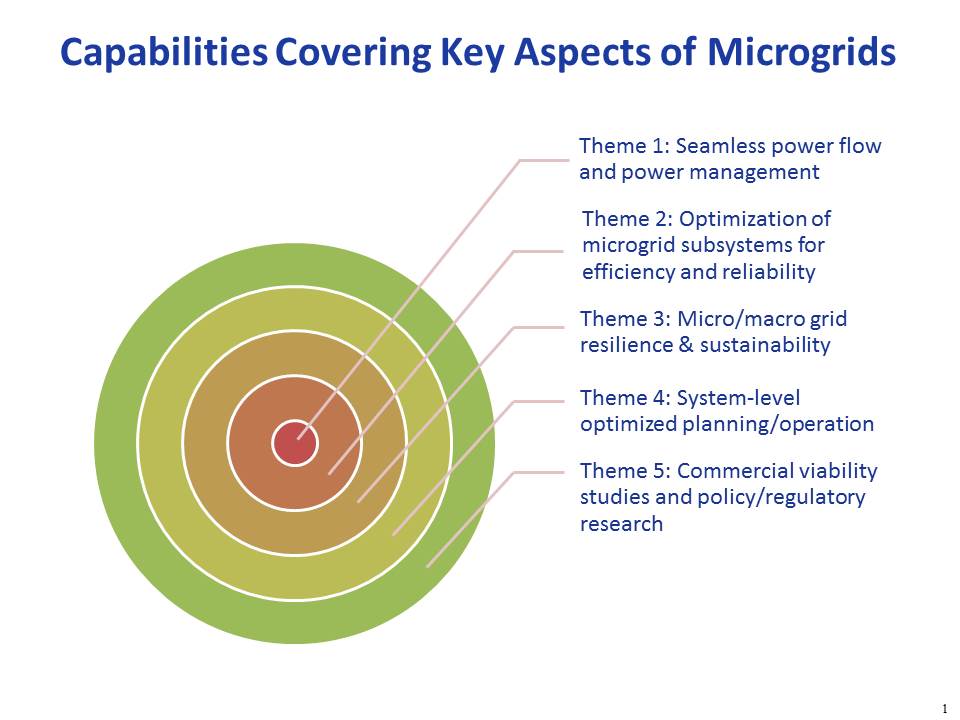
Beyond these immediate operational and public benefits, UConn’s microgrid will be another example of a state-of-the-art “living laboratory,” i.e., an on-campus platform for research and a functional demonstration project for education and outreach. Already, a half-dozen faculty members affiliated with the University’s Center for Clean Energy Engineering (C2E2), led by Dr. Peter Luh in Electrical & Computer Engineering, are preparing and envisioning research grant proposals on hot microgrid topics like energy storage, advanced optimization and ultra-fast programmable networks for virtual energy management.
Courtesy of Dr. Peter Luh (E&CE) and Dr. Peng Zhang (E&CE)
There is yet another benefit to UConn for being on the cutting edge of this emerging microgrid technology: corporate R&D partnerships. On February 26th, nearly 60 people, representing dozens of potential industry partners, in Hartford for a three-day “Next Generation Microgrids” conference, visited the Depot for presentations and tours of the University’s C2E2 and recently-established Fraunhofer Center for Energy Innovation. This visit was an opportunity to further showcase UConn’s leadership in these important aspects of climate adaptation and sustainable energy. The audience was a representative cross-section of the energy industry, including small and large, regional and international companies, all with an interest in microgrid R&D. The conference brochure touted a “staggering growth” since 2011 in installed microgrid capacity worldwide, with a “market value…likely to reach up to $27 billion by 2022.”
Plenty of good reasons for UConn to stay at the forefront of microgrid research!
UConn Research Helping Connecticut Adapt to Climate Change
Meanwhile, there are many University faculty members, across a variety of disciplines, who are conducting adaptation-related research. To highlight just a few:
Dr. Mark Boyer, a Political Science professor who focuses on environmental politics and is the director of UConn‘s new Environmental Studies B.A. degree program, is looking at the drivers and barriers to local governance of climate change. In particular, he’s studied climate adaptation policies, ordinances and other initiatives adopted by Connecticut towns.
Dr. Manos Anagnostou (Environmental Engineering/ENVE), Dr. Brian Hartman (Math), Dr. Marina Astitha (ENVE) and PhD candidate Dave Wanik (ENVE) are working on weather-based damage prediction models for the electric distribution system in CT and MA. The models relate high resolution weather forecasts, distribution infrastructure and GIS data to historic damage observations, and will soon include tree trimming data as a model input.
Related research into mitigating tree failure by Drs. Mark Rudnicki, John Volin (Natural Resources & the Environment) and Thomas Worthley (Extension) will further enhance reliability of the grid through management of trees and forest edges near power lines. Part of their “Stormwise” initiative was recently featured in this Hartford Courant article and this report on WNPR. The total Stormwise initiative is developing a systems approach which integrates the biophysical, economic and social dimensions needed for successfully increasing the resilience of trees, forests and the utility infrastructure to expected future storms. Follow them @StormwiseUCONN
Also, led by Dr. Jim Edson (Marine Sciences), nearly two dozen faculty members in UConn’s inter-disciplinary Atmospheric Sciences Group, along with affiliated graduate Research Assistants, met last month to discuss their climate change-related research. Many are studying the impacts of climate change on everything from terrestrial biota, to coastlines, estuaries and oceans. Much of this research is intended to provide data that will guide the development of mitigation and adaptation strategies, pursuant to the mission of UConn’s new Institute for Community Resiliency and Climate Adaptation.
You can learn more about this research by attending UConn’s third annualClimate Impact Mitigation & Adaptation (CIMA3) conference, scheduled for March 31st at the Student Union Theater and in the SU’s Room 104, across from Chuck & Auggie’s and the Blue Cow.
By Rich Miller, Director of the Office of Environmental Policy (OEP) and Kerrin Kinnear, OEP intern (4th semester, ENVST)
CIMA3/2014
Rapid Responses to Climate Change: The Actions We Need To Take
9:00 – Introductory remarks by Provost Mun Choi
9:15 – Keynote address from Curt Spalding, EPA’s top official in New England
10:00 – A panel of TED talks on the impacts of climate change on environmental systems, featuring a variety of UConn faculty experts
11:30 – 1:00 – The “CIMA Café”& Plain-Language Poster Session – a free networking lunch – enjoy finger food from Dining Services’ sustainable catering menu as you mingle with other students, faculty and staff during a “plain language” poster session explaining CIMA-related UConn research, centers and programs
12:30 – Closing plenary remarks by Dr. Eban Goodstein, Director of Bard College’s Center of Environmental Policy and Sustainability MBA, best known as lead organizer of Power Shift, Focus the Nation, 350.org and other higher ed-focused climate action initiatives.
1:30 – Conference concludes
Come and see for yourself what makes UConn a leader in Climate Adaptation! For more information about the event, please contact UConn’s Office of Environmental Policy at (860) 486-5773.
Regional EPA Administrator Curt Spaulding speaks at an event to announce the launch of the Institute for Community Resiliency and Climate Adaptation held on Jan. 24, 2014 at the Branford House at the University of Connecticut Avery Point campus in Groton. Seated from left are Governor Dannel P. Malloy and Provost Mun Choi. (Peter Morenus/UConn Photo)Eban Goodstein
Once again, volunteers rallied at Green Game Day to promote recycling to Husky fans. Student volunteers from EcoHusky (Storrs and Avery Point), EcoHouse, and the OEP’s very own interns went to the men’s game on Sunday afternoon to greet fans as they entered the stadium, help direct recycling during the game, and to collect the leftover recyclables from the stands after the game. Volunteers collected 260 bottles from the women’s game and a whopping 820 at the men’s game, for over 1000 bottles recycled! Members of the EcoHusky student group returned the bottles to raise money for the club’s future sustainability efforts.
Volunteers show off how many recyclables they collected!
We had a great time at the game, despite the unfortunately outcome of the game. We especially loved talking to fans about recycling, answering questions about the cost/benefit analysis of recycling, and hearing from fans who proudly always recycle!
OEP Intern Meredith handing out temporary tattoos and outreach materials to fans as they entered the game.
Volunteers from EcoHouse ready at the door, waiting to welcome fans to the game!OEP Interns Katie and Chris pose with Corinne and the Husky Mascot. UConn Recycles!
On March 25, 2008 University of Connecticut President, Michael Hogan, signed the American College & University Presidents Climate Commitment (PCC) promising that the university would aim for carbon neutrality by 2050. This means that the university would have to reduce greenhouse gas emissions, particularly carbon dioxide, through new projects and sustainable initiatives. Since the signing of this agreement, UConn has been retro-commissioning and re-lamping many large buildings to save on energy costs and negate greenhouse gas emissions. The university has also implemented an energy efficient fuel cell on the depot campus. So have we made progress?
UConn has reduced its primary CO2 emissions by 4,802 tons per year since 2011 (more than 4%). This is a great decrease considering the increased student population, building space and tough winters (requiring a lot of energy consumption for heating) which Storrs has experienced over the past few years. It should also be noted that our emissions tracking technology and behavior has been improved over the past few years. We expect to see further drops in greenhouse gas emissions each year. To put our expected greenhouse gas emissions decreases into perspective, keep in mind that the retro-commissioning and re-lamping projects from the past few years have expected carbon dioxide offsets of 16,000 tons per year (This would cut out main body of emissions by more than 10%). Although we didn’t see the expected decrease in 2013 due to some of the above factors, we believe that the general trend will continue to be downward.
UConn uses the University of New Hampshire’s Campus Carbon Calculator to calculate emissions. Scope 1 refers to direct emissions from campus activity. Scope 2 refers to indirect emissions from purchasing and related activities.
The greenhouse gas inventory takes a very long time to complete because we have to contact various people from many different departments for emissions data. We put all of this data into common terms, verify it, and enter it into a large greenhouse gas calculator so that we can analyze our results. Let’s just say that we’re happy to be finished with this year’s greenhouse gas inventory, for now.
On Tuesday, February 18, representatives from CL&P hosted an energy summit at the Nathan Hale Inn to collaborate with UConn’s energy employees as well as members from other departments and determine next steps for the University’s energy goals. The summit started off with a recap of what UConn is currently working on and what successes the University has accomplished thus far. For example, in the past three years UConn has prevented 39,370 tons of coal and 117,985 barrels of oil from being burned. Additionally, we were ranked #1 in 2013 for Sierra Club’s Cool Schools Survey. Going forward UConn plans to mitigate the impact of a growing university through behavior change in the community, retrocommissioning of old buildings, and making sure that all new buildings are as energy efficient as possible.
CL&P invited Walt Henry, a former professor at MIT and current energy consultant to share his experiences at MIT with UConn. According to Henry, an energy efficient building does not have to cost more than a standard building. “A building is like a cake,” he said “the ingredients in the cake itself are what’s most important, not the frosting and cherry.” What he means by this is that all you need to do in order to make an energy efficient building within budget is to spend your money in the right places. Instead of focusing on fancy extras that may seem important, you should focus on using the right materials in the right places. For example, instead of spending money on limestone, use cast stone. It is less expensive and works just as well. You should however invest the money on good spray foam insulation and windows since air tight walls increase efficiency.
Henry ended his presentation with some key take-aways that may help UConn when making the designs for new buildings. For one thing, architects and engineers must collaborate so that the structure of the building and the internals work together. Also it is important to take intelligent risks, knowing what could possibly go wrong, but not being afraid to be a leader in sustainable building. Finally, Henry noted his opinion on how LEED (Leadership in Energy and Environmental Design-a current ranking system for many green buildings) should not drive the design of a new building. The planners should make the best building they can and then use LEED as a yardstick. This way, they have the chance to be innovative and possibly even make a better building than LEED calls for.
Going forward, UConn still has many things to consider and there is always room for improvement. However, meetings like this increase collaboration among UConn departments, our partner CL&P, and other universities to help turn the best ideas into reality one step at a time.
 This past Tuesday marked the 44th annual Earth Day! Despite my original nervousness due to some uncertainty concerning the weather (it was, after all, a Tuesday in Storrs), I am happy to report that April 22nd was a gorgeous day on campus, which made UConn’s yearly Earth Day Spring Fling a fantastic success. Sun shined down over the thousands of students, faculty, community members, and environmental exhibitors, all gathered to celebrate sustainability.