This article, in honor of Black History Month, was written by Toni Odom – Kelly, a sophomore English major and Sustainability Intern at our office. Within her role at the Office of Sustainability, she focuses on storytelling that highlights student perspectives, and engages students with sustainability at our campus-wide events.
At the University of Connecticut, the Office of Sustainability is advancing sustainability across a variety of programs. Whether that be through UConn’s annual submission to the UI Green Metric World University Rankings, or through student engagement events such as the annual Earth Day Spring Fling, this office is working to drive sustainable practices within the university and among its students. The changemakers behind these efforts are students just like you and I—whose passions derive from their personal upbringings and identities. In the realm of sustainability, there is a diverse number of environmentalists who make great efforts and advancements to mend the climate crisis. Unfortunately, the efforts made by people of color often go unrecognized and underappreciated. Or often times, sustainable efforts made by people of color from the past are celebrated despite there being current leaders in the field that are Black, Brown and Latino. At the Office of Sustainability, the unique role our Black interns provide is championed and celebrated. In honor of Black History Month, the Office of Sustainability is commending the impacts our Black interns are making today at our university.
Many of our interns who are fostering sustainable innovation were drawn to the Office of Sustainability because of their backgrounds. Within two of the Office of Sustainability’s internship programs, the Sustainability Internship and the Sustainability Outreach Internship (SOI), six of our Black interns were interviewed to discuss the impact their identity has had on their goals in the sustainability field and their connection to the environment.
 Kelechi Uzobuife, a freshman SOI who is a PNB major involved in Stem Plus and the Pre-Med Society, describes her job as “promoting environmental success for residence halls and for the UConn community”. As an SOI for Northwest residence hall, she reflects on the impact she’s had on her residents. “Being able to already have an influence on some of the people in our residence halls and teaching them different things about sustainability through our events is such a great way to push that agenda of creating a cleaner space overall. Recently we have been giving out recycling bags for RecycleThon and I have seen people using them. That shows that even the little things can make such a difference. When doing the audits the past two weeks I noticed so many contaminants, and after a week I have seen such a huge improvement.” However, her childhood experience engaging with recycling is what drew her to sustainability. Kelechi shared that growing up she and her family would volunteer at a local soup kitchen. To raise money for resources and supplies, she and her family would recycle bottles. This served as a way to help others while also helping the environment.
 Positive experiences like these help connect our interns to their communities and environments. Take Damian Howson, a first year Environmental and Natural Resource Economics and Geography dual-degree and SOI for North resident hall, describes his early experiences with the environment and connection to sustainability as “Growing up, I’d come up north and go to Lake George every year. A lot of that time was spent in nature and discussing wildlife with my family and going on a sailboat on the lake with my grandfather. That connection with nature is why I am so interested in sustainability.”
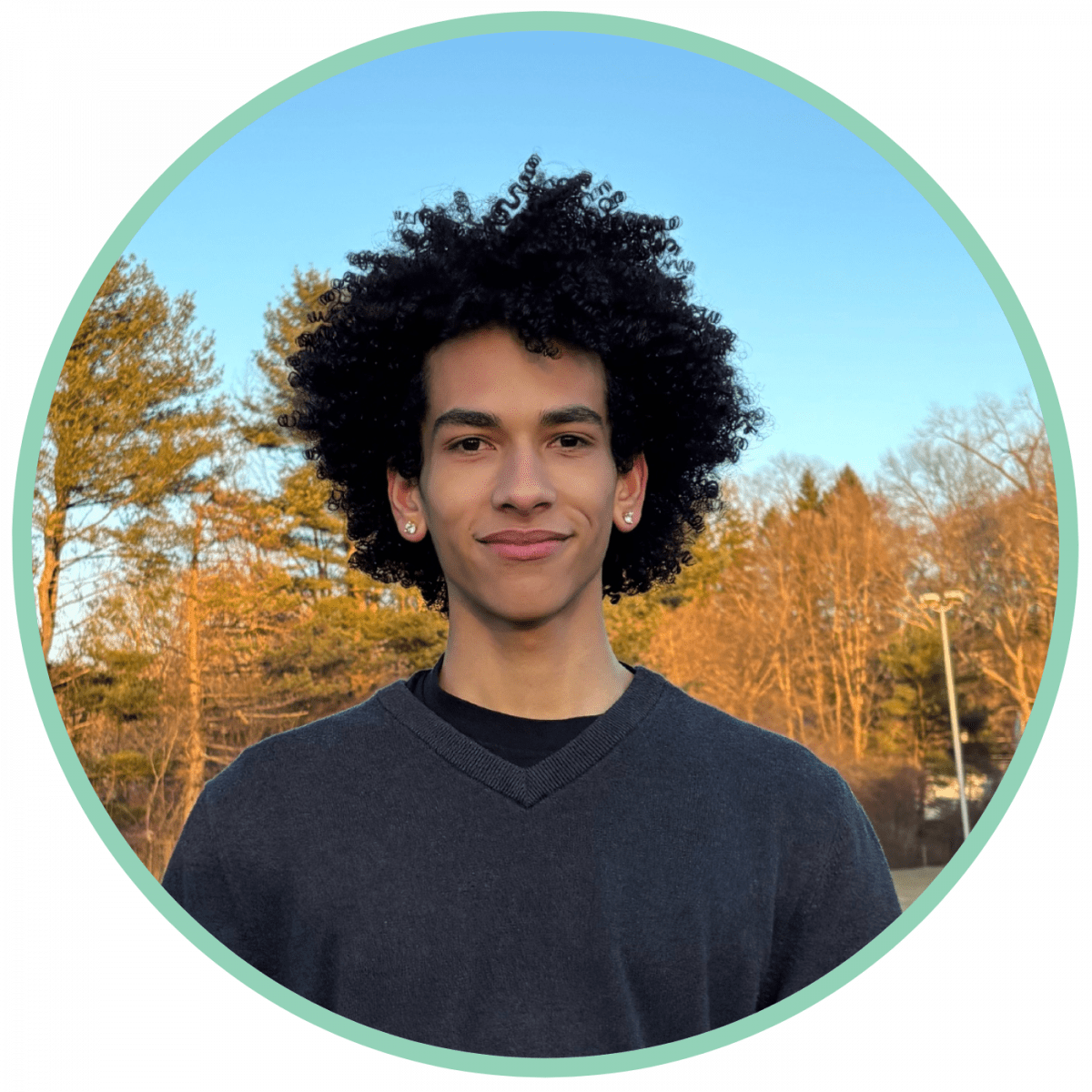 Student experiences are impacted by a variety of factors, including how their identities impact their perspectives. Junior Sustainability Intern and Truman Scholar nominee Brenny Alcantara who leads cleanup events and manages social media production at the OS says his sustainability journey has been influenced by his experience as an Afro Latino. He says his identity “…makes me much more aware of the social conventions that play into environmentalism. It gives people more perspective, flexibility, and enables people to problem solve in different ways. It helps me become more open-minded. Coming from Waterbury and Puerto Rico – both are disparities cities compared to cities around them. Both places are primarily composed of POC, which helps me understand that there is a system that lies underneath it all. It facilitates my ability to understand different perspectives and helps me use those perspectives to build a better team.”
These perspectives motivate students across the sustainability field at UConn. Students like Junior SOI Judith Otunnu, who is an active member in EcoHusky, Lions Club, and Honors Across State Borders, is driven to “try and make sure that what I’m doing has an inclusive viewpoint. I always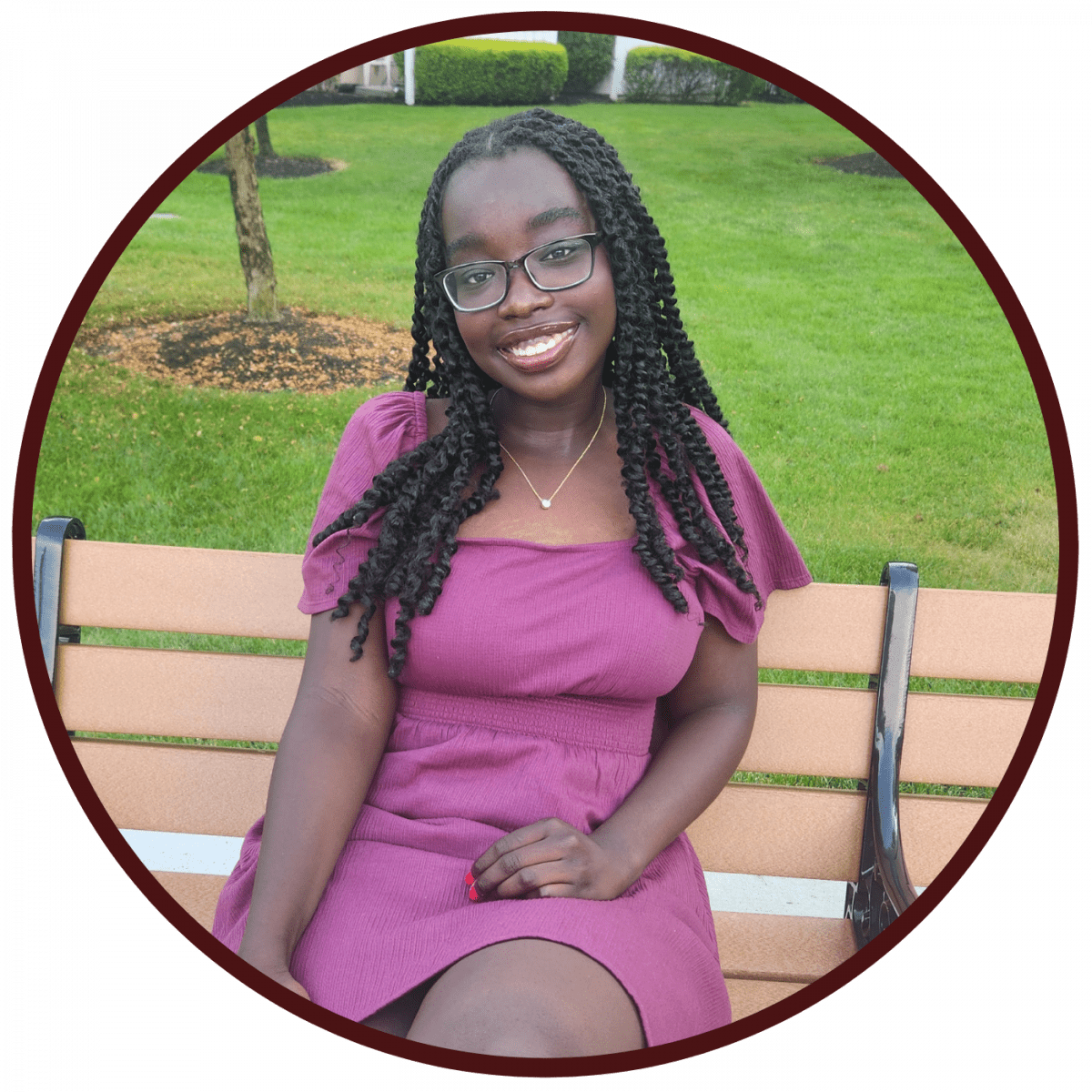 want to make sure I’ve included considerations on the impacts of minority populations and not just white ones. Our SOI activities are already rooted in inclusivity and are open to everybody.” For Judith, the welcoming atmosphere she fosters at her SOI events reflects how her identity informs the way she approaches her role. Judith explains her approach to the sustainability field as, “I think as a Black person you come by with an entirely different perspective. In the sustainability environmental field there isn’t a lot of Black or minority representation. So, you know that you’re going to be one of a few Black people in a white dominated space. I make sure that I am putting my best foot forward to make an impact and make significant decisions in what I do every day.” However, Judith is among many of our interns who consider their identity as a key factor to their perspective in the sustainability field.
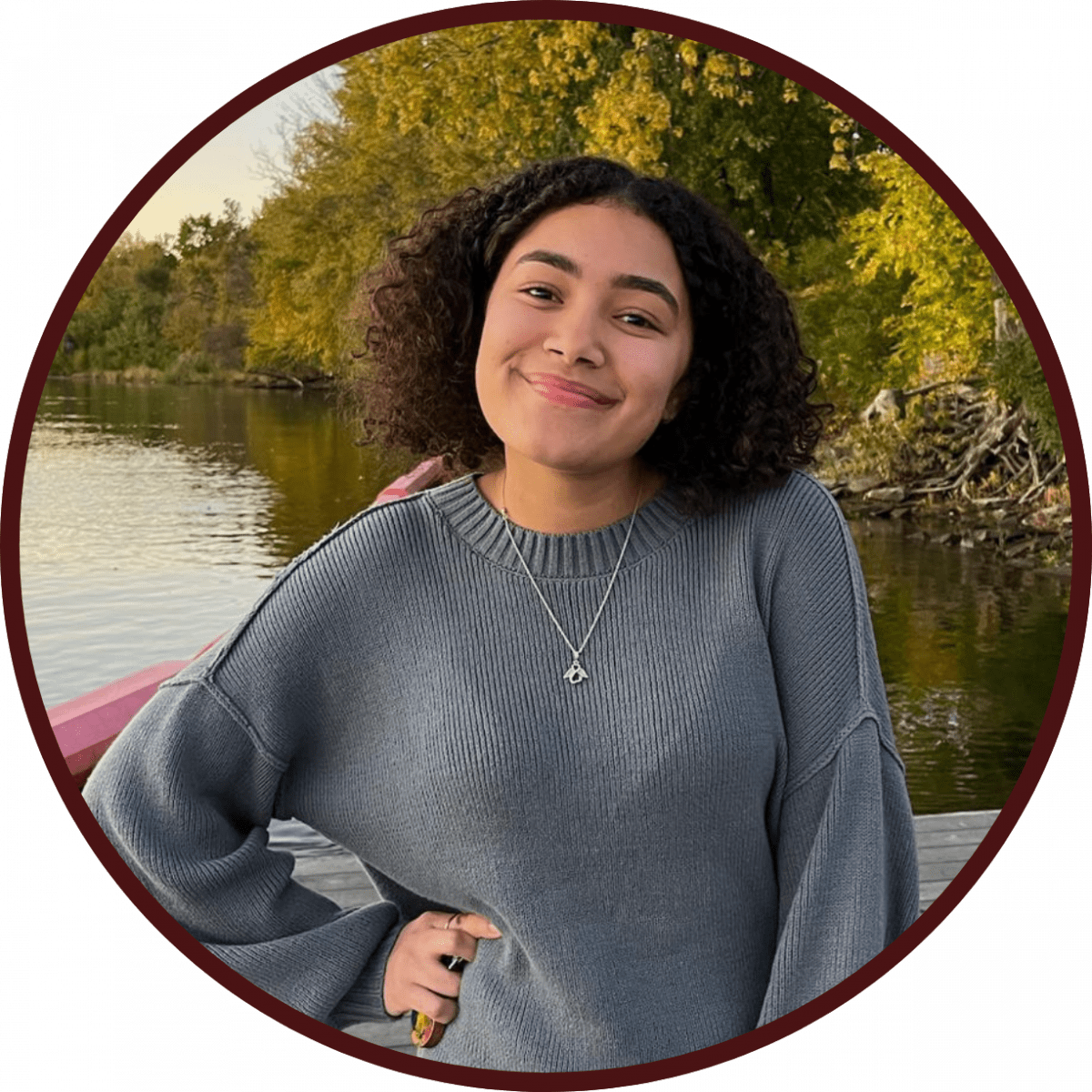 Emily Rodriguez, a sophomore SOI studying English on the Secondary English Education track who is an active member of Her Campus and an Ignite Fellow with Teach for America, further emphasizes the influences that her identity has on her perspective in sustainability and her goals as an SOI. As an Afro Latina, Emily shares, “…I have a goal, especially this semester, to teach others how people in marginalized areas are greatly impacted by climate issues… I live in New Britain, Connecticut, which is a marginalized city and is often impacted for extensive periods of time when there are severe weather conditions because of historic redlining and lower-quality housing. As we’ve had recent snowstorms and the upcoming months tend to expect a lot of rain, I want to educate others on the direct impact that it has on people living in underrepresented communities and who have limited resources in weather disasters. So, when taking on projects, I aim to focus on how I can represent students who look like me and come from underrepresented areas that are often overlooked in how they’re impacted by climate change and global warming”.
Emily dreams of becoming an educator. She plans to become both a high school English teacher and later become an English professor. Our interns have very ambitious career aspirations and are planning to use their experiences at the Office of Sustainability to help them reach their goals. Brenny describes his career objectives as an OS intern and beyond as “…ensur(ing) that every single UConn student current and future understands, appreciates, and cares about the environment. Creating a level of understanding and care for environmentalism would be great. I’d like to become a prominent leader, one who promotes the environmental issues of my own community, focused on the systemic level of disparities, and creates solutions.”
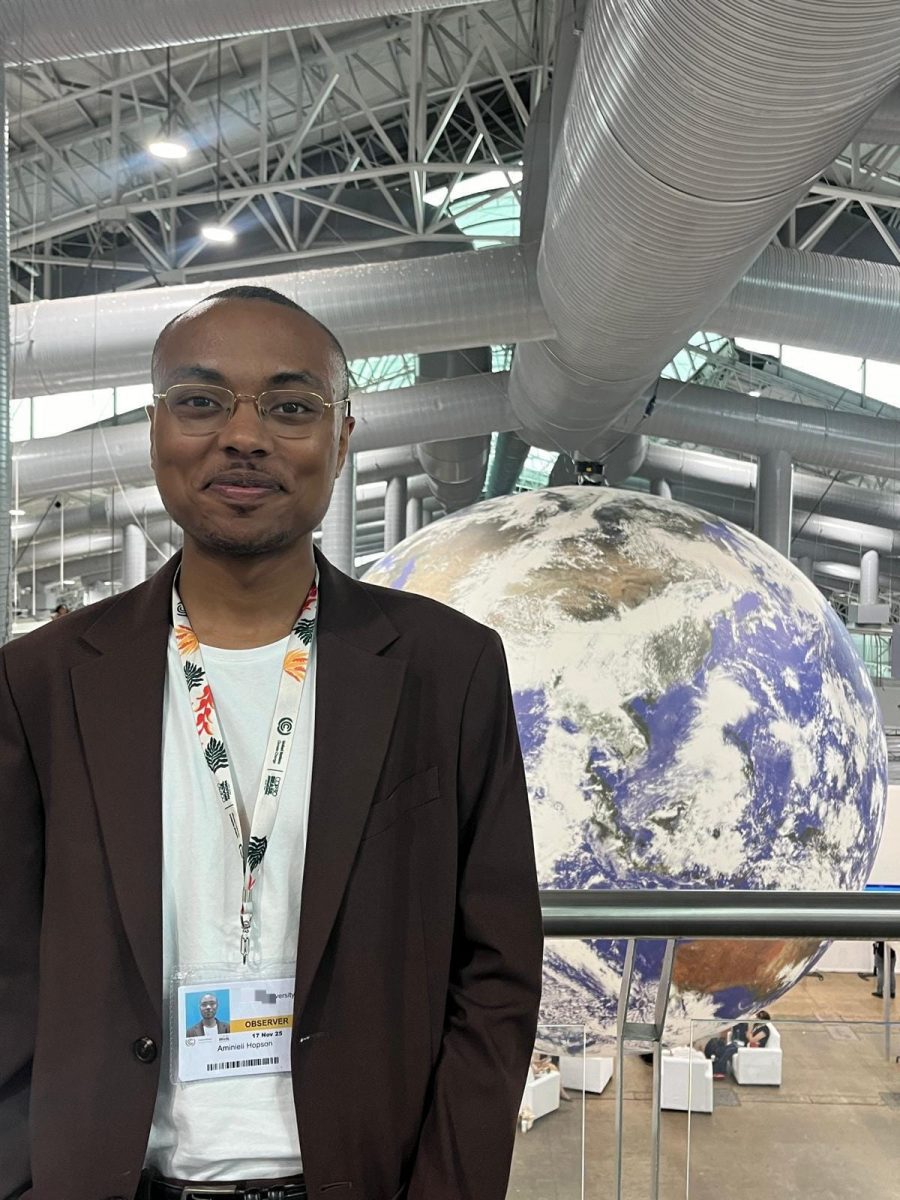
While many of our interns are continuously working on developing as changemakers for UConn every day, our Senior Sustainability Intern Aminieli Hopson reflects on his three years of changemaking at the Office of Sustainability as his time at UConn comes to an end.
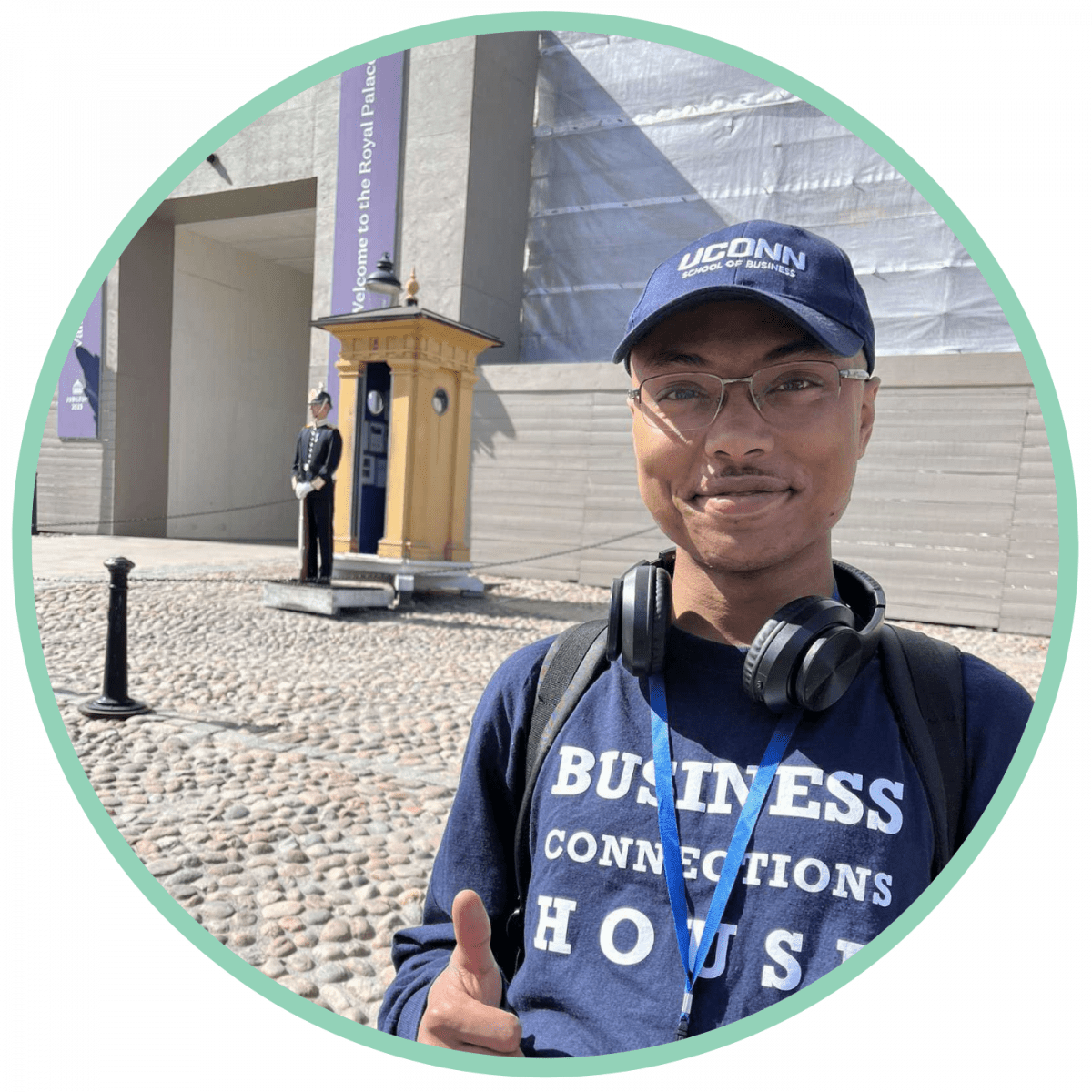 As someone who has embarked on many opportunities while at UConn as a Real-Estate and Urban Economics major, an active member of the UConn Consulting Group, Global Business Ambassadors, and an alumni of both the COP30 Fellowship and the Business Connections Learning Community, Aminieli has acquired a profound amount of wisdom, perspective, and skill in the sustainability field and in career development. These skills have helped him grow into a leader who has fostered innovation at the Office of Sustainability. Reflecting on one of his most meaningful contributions, Aminieli explains, “My first year the most common issues I talked about was the jargon and language we use in sustainability. When we use jargon, it might not be as accessible or relatable to people, even if the topics are relevant to certain demographics.” Aminieli’s advocacy for accessible language brought an overlooked disparity in the environmental field to light. As an African American and Tanzania East African, Aminieli’s roots growing up in both the north and south of the United States as well as living in Tanzania developed a different lens that challenged him to consider disparities when tackling sustainability.
As Black environmentalists, these interns consider disparities within sustainability efforts and try to ensure their work makes for a greener and more equitable future for all. One of the first steps is recognizing that climate change disproportionately affects Black and Brown communities, and to do this we must prioritize environmental justice in our activism and efforts. Damian emphasizes the importance of environmental justice when sharing a personal environmental inequity back home in South Florida where “there are a lot of Black areas that are more prone to flood hazards and a lack of emergency response assistance. Theres a lack of consideration for Black people in the field of sustainability. It’s important to talk about the environmental justice movement because it’s so essential. Environmentalism is so intersectional and it wouldn’t exist without the intersectional aspect.” Kelechi notes a disparity she has observed by adding, “After learning about how A.I data centers construction targets specific Black and Brown communities, I feel like we need to change ASAP. We need to discover cleaner and safer resources online instead of using ChatGPT or Google Gemini.”
Although these environmental disparities are realities for these interns, they do not put a damper on their motivations. In actuality, these realities motivate them to continue their efforts and prepare the next generation of future Black environmentalists to pursue this field. When asked what advice they’d give to Black youth interested in pursuing sustainability, Emily stated, “Based on my own research about the environment and present issues, they often focus on white communities rather than being geared towards underrepresented ones and by pursuing the environmental field, it is critical in understanding what’s ailing and how it differs from the story that’s told for the majority. For Black youth who want to pursue the environmental field, they should be ready to do further research and to have meaning and intentional solutions that will benefit Black people who have been historically unrecognized.” Aminieli reminded Black youth that “Everything you have experienced leading up to this decision is rooted in sustainability and no matter what you’re studying, you have a unique opportunity to create meaningful impact within this work as long as you make sure to develop skills and identify projects that speak to what you’re passionate about. Ensure that your skills sets are transferable and the sky is the limit.”
The sky truly is the limit for UConn’s SOI’s and Sustainability Interns. By highlighting their achievements and celebrating how their race and ethnicities strengthen their ambitions, UConn’s Office of Sustainability will continue championing the diversity within its team and the entire student body. Thank you to our interns for remaining true to themselves and always applying their unique perspectives to foster innovation and solutions toward a sustainable future.


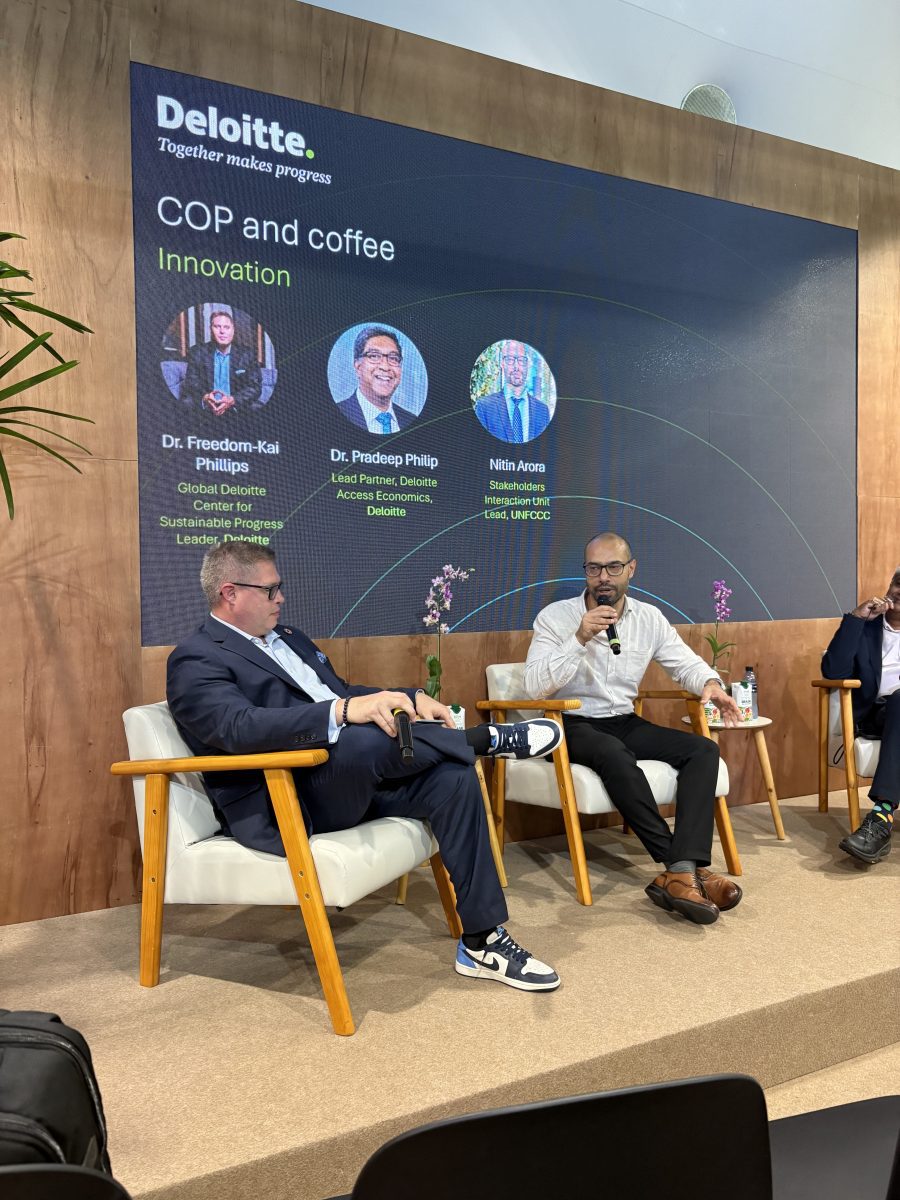 On Wednesday, we met with Dr. Phillips and were provided with an experience that I will forever appreciate. Dr. Phillips walked us around the Blue Zone Pavilions, introducing us to his colleagues and friends who work at different climate organizations. He gave us a proper lay of the land and made COP feel smaller and manageable. We met leaders working in the Ocean, Digital Innovation, and World Green Economy Pavilions. We got the exclusive opportunity to talk with a secretariat at the United Nations, in the restricted section of the Blue Zone. This experience framed my perspective for the last two days I spent at COP. It reaffirmed the idea that everything is about the connections you have with individuals in and outside of your field. As we parted, Dr. Phillips reminded us that, in 10 years when we are growing professionals in our respective fields, we need to share our experiences like he did.
 On Thursday, I was able to attend a talk that I had been looking forward to attending all week, put on by the International Bar Association that addressed how lawyers and law firms can advance climate mitigation and adaptation through pro bono work and beyond. While it is no secret that there are lawyers out there fighting for the environment, I find it extremely important that all lawyers, no matter what their practice, are conscious of the effects their work has on our natural world. I found this talk so interesting because it stressed the importance of that idea, and the speakers provided actionable steps to help achieve those goals. For instance, the speakers emphasized providing non-governmental organizations and civil society groups that protect vulnerable groups and mitigate climate change with free or reduced-cost legal services. I will surely take back what I learned from this talk and apply it to my future career as an attorney.
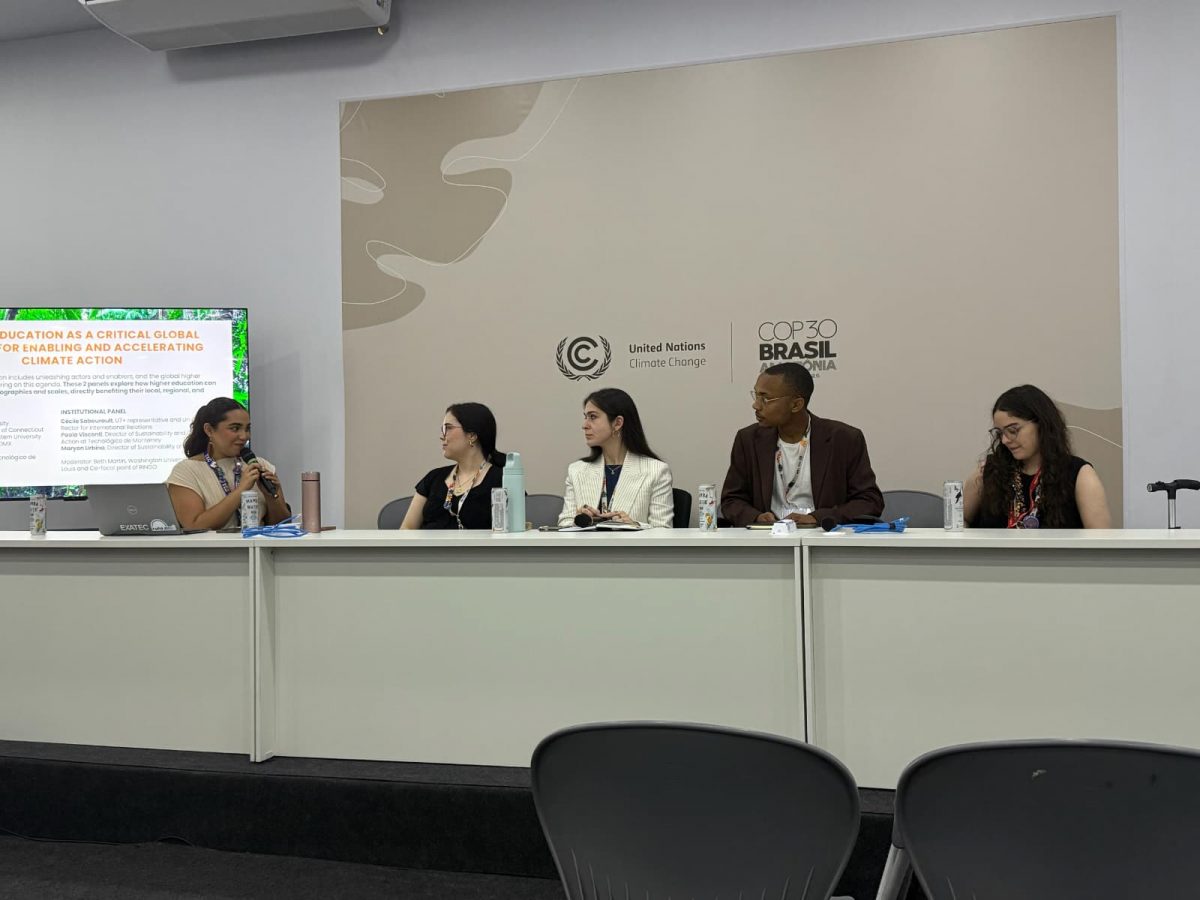 Afterwards, I had the honor to participate in the Higher Education as a Critical Global Partner for Enabling and Accelerating Climate Action panel alongside Valeria Soto (Tecnológico de Monterrey), Phoenix Boggs (Yale University), Javiera Cabezas Parra (Northwestern University), and Fernanda Muraira (Universidad Iberoamericana, Ciudad de México). We exchanged insights on unique ways youth have felt both empowered and faced barriers when getting involved in climate action. It was incredible to witness the administrators and delegates in the room break down their plans to combat those barriers.