 Winning a monumental court case should feel incredible, right? The opposite was true for Luisa Neubauer, the plaintiff in Neubauer et al. v. Germany. In 2019, Neubauer began organizing against climate inaction with Germany’s Fridays for Future. She sued the German government because its target of reducing greenhouse gases was insufficient and had violated her human rights. In April 2021, the Court ruled that Germany failed to set provisions for emission reductions beyond 2030, ordering the government to increase its climate ambitions. Ironically, the government applauded the youth’s win, calling it a victory for the climate movement. Since the circumstances of her win were devastating, Neubauer recalled that it was a sad day. No young person should have to sue their government for climate inaction, especially in countries with a reputation for defending human rights. Neubauer’s case was one of several climate trials I learned about on Solutions Day.
Hearing about the losses endured by these selfless plaintiffs and their courageous lawsuits taught me how climate litigation advances climate justice. At the core of each case were their humanity and morality. Mike Smith, the plaintiff in Smith vs. the Attorney General, spoke about protecting the Māori people. He argued that the New Zealand government breached its public law duty to protect its citizens, particularly the Māori people, from the dangers of climate change. Smith emphasized the morality of climate change. Greed and selfishness are at the heart of climate change. Courts and labs cannot solve these moral issues; instead, we must look within ourselves to shift our morality and repair our relationship with nature. We must prioritize our customs and cultural traditions over capitalism and overconsumption. Only then will the law change, as Smith claims, “dragged kicking and screaming along behind public sentiment.”
For Pabai Pabai, a plaintiff in Pabai Pabai and Guy Paul Kabai v. Commonwealth of Australia, his culture is inseparable from the land. A First Nations leader from the Gudamalulgal nation of the Torres Strait Islands, he sued the Australian government for its failure to reduce emissions, leading to the forced migration of his community and the destruction of their sacred sites. Pabai describes his motivation for this lawsuit; “I will fight to stay here…This is my land. I want my kids, grandkids, and future community to know that this is my dad’s land. This is how he identified himself to us.” With the threat of rising sea levels preventing his posterity from inheriting cultural traditions tied to the land, Pabai is determined to defend his land and the memories it holds.
The lessons of resilience, morality, and cultural identity shared by these plaintiffs will guide me in my activism for climate justice and my future career. If we have the privilege of arming ourselves with legal education, we should use it to protect the environment. Criminalizing the destruction of the planet is the minimum legal requirement for justice. According to Stop Ecocide International, “ecocide” means “unlawful or wanton acts committed with knowledge that there is a substantial likelihood of severe and either widespread or long-term damage to the environment being caused by those acts.” Jojo Mehta, the Chair of the Stop Ecocide Foundation, spoke about codifying ecocide in the international legal order with sanctions similar to genocide. While I listened, I reflected upon UConn’s connection to international criminal justice through the Dodd Center for Human Rights, named to honor Senator Thomas J. Dodd’s work to prosecute the Nazis at the Nuremberg Trials. Dodd’s prosecution of war crimes is precisely what these plaintiffs and climate lawyers are trying to achieve–punishing those who have irreparably harmed the environment. Learning about ecocide and how criminal law can mitigate the climate crisis clarified my goals for public service. I aspire to amplify the stories of climate refugees, activists, and Indigenous peoples and urge world leaders and policymakers to listen. In my future legal career, I hope to help build an international criminal law framework to prevent and deter ecocide.


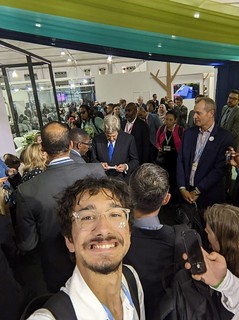



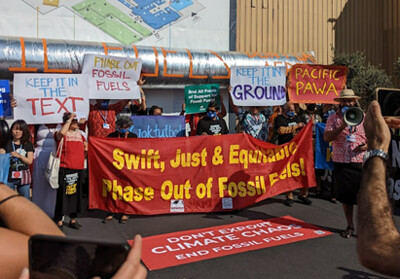 This past Tuesday, our cohort attended an event presenting on the Emission Gap Report by the United Nations (UN). This report provides an updated assessment on the gap between our current global greenhouse gas (GHG) emissions and our goals for 2030 to limit the global temperature below 1.5 degree Celsius. This is necessary to minimize the most significant harm from climate change as determined by the Paris Agreement of 2015.
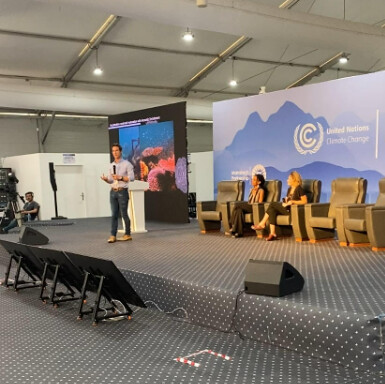 Before my arrival at COP27, I had a dream that I could open any book, jump into its pages and be immersed in its story. I woke up imagining all the stories I would want to live. But simultaneously I thought of the stories I would not want to experience. These are the ones that frightened me or made me feel anxious, alone, helpless.