Paige Gregory, Environmental Studies and Political Science Undergrad ’28
COP31 is heavily focused on moving from climate commitments to implementation. Past conferences have centered around negotiating international agreements and establishing targets, but many have complained that there isn’t enough action. To respond to this, Turkey has centered its COP advertising around being the COP of implementation on top of negotiating agreements. One major goal of COP31 is the 35 by 35 Global Electrification Pledge. This aims to increase electricity’s share of global energy consumption to 35% by 2035 and, in the fine print, accelerate the transition toward cleaner energy systems. I personally find it interesting that Turkey has spearheaded this movement because at the same time as this advertising, they announced the discovery of two new oil fields with an estimated combined oil potential of 135 million barrels. This contradiction raises the question: how can countries meaningfully progress towards a global energy transition while continuing to expand fossil fuel production?
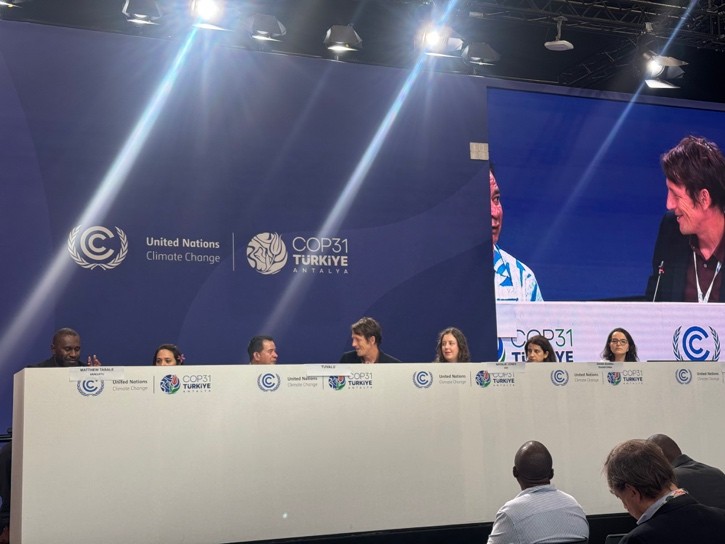 This issue was discussed at a press conference I attended featuring representatives from the Marshall Islands, Vanuatu, and Tuvalu. These Island nations are some of the countries most vulnerable to climate change and its effects. They contribute little to greenhouse gas emissions, but face some of the most severe consequences of global warming. During the conference, the Marshall Islands emphasized the importance of making clear roadmaps that name priorities, resources, and actions necessary to transition away from fossil fuels. We can’t just keep making statements saying that we’ll do better – there needs to be an actual plan.
Climate commitments alone are not enough. Actionable plans, financial resources, and international cooperation are needed for change. These countries also brought up a great point: many other countries advocate for stronger climate action while continuing to subsidize the fossil fuel industry. If governments are serious about addressing climate change, their investments and policies must reflect these commitments.
Despite their climate challenges, these island nations are stepping up and leading in the energy transition when bigger countries, like the US, will not. Vanuatu and Tuvalu are two new members of a coalition working toward transitioning away from fossil fuels. They talked about their work to expand renewable energy and reduce dependence on imported fossil fuels. There is a fossil fuel supply crisis in these communities, like the Marshall Islands where gasoline prices have reached between $8 and $15 per gallon.
I found it very impactful to hear directly from representatives of these countries. As an Environmental Studies student at UConn, I have studied climate science, international agreements, and environmental justice. However, listening to these representatives advocate for their communities provided a perspective that I don’t find in school. I could feel their pain and frustration through their words. Climate justice is essential in international policymaking. Countries contributing the least to climate change often experience very severe impacts, yet they are acting as leaders. I wish the United States could catch up. The time for change is now.