My time in Sharm El-Sheikh was a display of the progress made in the fight for climate justice, but a sobering reality of how much further we have to go. I came to the conference with a desire to see ardent talks making monumental progress, but I was faced with stolid negotiations focused on the minutiae rather than tangible, large-scale solutions. Everytime I sought progress, I was met with compromise. Perhaps the zenith of COP27 was the announcement of a “Loss and Damage” fund intended to assist those countries most affected by climate change. Yet, there is no clear indication of who will pay into the fund, where the money will come from, or who will benefit.
A part of me anticipated this from the beginning. I appreciated how hypocritical it was to host an environmental conference in Egypt. The in-person conference poses large accessibility issues, both in terms of financial cost but also ideological freedoms for individuals identifying with certain groups. This is in addition to the massive carbon footprint created by thousands of people traveling to and from the conference.
COP is merely a microcosm of the greater unjust systems around us that oppose equality, freedom of speech, and the environment. While I write this, thousands of fans are gathered in Qatar for the 2022 FIFA World Cup, a sporting event riddled by corruption and bribery, and being hosted over the dead bodies of 6,500 migrant workers. I write this to the backdrop of months of protests in Iran over the murder of Mahsa Amini, and to Alaa Abd el-Fattah’s hunger strike against the repressive Egyptian government. I thought things would be different at COP, but it was very much the bureaucratic, sanitized process we’re used to seeing: a façade of rhetoric, but a dearth of real action.
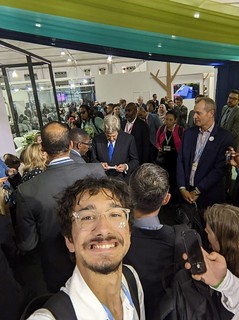
Despite all this, I found the silver lining in the young voices at the conference, particularly in my fellow UConn students. This is what encouraged me and helped me appreciate how important this conference is. The conversations between UConn students and faculty were filled with emotion, determination, and genuine passion. I was uplifted by experts committed to making a change in their field, as well as by the first person accounts of indigenous peoples. The enthusiasm was palpable at one of the most seminal events at this year’s conference: the invitation of the president-elect of Brazil. Lula. There was a fervor around his environmental politics and hope that his work will be a step in the right direction to reverse the work of his predecessor.
To me, this is the true purpose of COP. The conference has the power to light the fire under thousands of young activists who are eager to enact change. Bringing people together to collaborate then dispersing them with newfound knowledge and motivation is difficult to do. It is how change begins from the ground up globally. I hope the organizers of COP embrace this aspect of the conference; the goal should be to increase access to the conference and invite young activists who bring a hunger to change their communities.

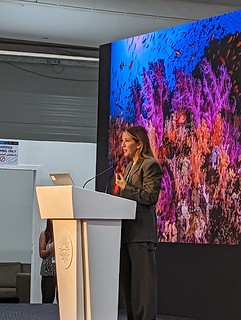 Sharm-el-Sheikh, the location of COP27, is a coastal Egyptian resort town that is adjacent to the Great Fringing Reef. Located in the cooler waters of the Red Sea, this reef is one of the most resilient reefs in the world; it is no surprise that COP27 publicity and advertisements repeatedly featured images and videos of the beautiful and vibrant underwater world. On one panel, “Hope For Coral Reefs,” singer-songwriter Ellie Goulding praised the reef’s “sheer visual beauty” and encouraged the audience to “please experience this reef yourself.” Yet at a conference where activisists and negotiators are working long days– and sometimes overnight– there seemed to be little time left to enjoy the beauty of nature.
 At the same time, it is important to recognize the privilege and responsibility that comes with being able to attend COP27. Very few people have the opportunity to travel to the conference, and it is especially rare to be able to do so as a student. To have spent a week in a hotel along the coast of the Red Sea was amazing, with that luxury in juxtaposition with many of the stories told by activists from communities where significant impacts from climate change are already being felt. However, I also believe that the coming together of activists, politicians, negotiators, citizens, and indigenous peoples from around the world in one place is invaluable, and that finding joy in the world around us is necessary to sustaining activism. Particularly as frustratingly little progress was made on reaching a 1.5 degree warming target, it is important to take time to reset for the continued fight for a more equitable and sustainable future.
 Winning a monumental court case should feel incredible, right? The opposite was true for Luisa Neubauer, the plaintiff in