This article appears in UConn Today from May 11, 2026.
UConn highlights wellness of people and planet in its strategic plan, and students play a key role in pushing that commitment. Ten new student-lead projects will enhance planetary and social health in the latest round of Environmental and Social Sustainability Grants.
Organized and funded through the UConn Office of Sustainability, the Environmental and Social Sustainability Grants (ESSG) Program funds projects that enhance environmental and social sustainability while engaging students and community members. Each student grantee is supported by a faculty or staff member over the course of the grant period. Applicants shared ideas spanning education, research, authentic community engagement, and campus operations. This is the fifth round of ESSG funding since 2021, which has helped launch the Swap Shop (now Thrift Den), a composting privy at Spring Valley Student Farm, and efforts to combat food insecurity via hydroponic farming.
“The ESSG program is one of several experiential learning programs led by the Office of Sustainability that empower UConn students to translate ideas into meaningful action. As sustainability challenges become increasingly interconnected, these projects give students the opportunity to develop real-world solutions that advance environmental stewardship, community resilience, and social well-being. We are proud to support students who are helping shape a more sustainable future for Connecticut and beyond. The dedication of our faculty and staff mentors continues to be instrumental in turning these ideas into impactful, lasting initiatives,” shares Patrick McKee, Director of the Office of Sustainability.
Ten projects were awarded funds due to their interdisciplinary nature and ability to advance sustainability and equity.
Frosted Elfin Butterfly Habitat Expansion Planning at UConn
UConn hosts a population of the state-threatened Frosted Elfin butterfly. This project will monitor the population, assess habitat across campus, and create a habitat expansion plan to guide future management while engaging students in hands-on biodiversity conservation.
- Student: Charlotte Brennan, MS Candidate in Natural Resources and the Environment
- Faculty Mentor: Dr. Chadwick Rittenhouse, Associate Professor in Residence, Natural Resources and the Environment
Greening the Gap: Heat Equity and Nature Access at UConn Stamford
Stamford’s low-income neighborhoods face dangerous urban heat and green space deprivation, which research links to a 20% increase in psychiatric risk, impaired sleep, higher stress, and increased violence. Yet no map of where these risks concentrate exists. Using GIS mapping, community engagement, and co-designed cooling interventions, Greening the Gap will give residents, planners, and UConn a shared evidence base for environmental justice action.
- Student: Agatha Cardoso Freitas ’28 (CLAS)
- Faculty Mentors: Sohyun Park, Associate Professor in Plant Science and Landscape Architecture, Julia Smachylo, Assistant Professor in Plant Science and Landscape Architecture
Soils Under Treatment: Evaluating the Influence of Fungal Biomass on the Recovery of a Long-Term Contaminated Soil From New England
This project will evaluate the effect of fungal amendments on the mobility of heavy metals, decomposition of recalcitrant organic compounds, and soil health parameters, to determine if using fungi for bioremediation is a feasible strategy for rehabilitating soils from brownfields in Connecticut.
- Student: Paulette Goyes, Ph.D. Candidate in Plant Science
- Faculty Mentor: Mia Maltz, Assistant Professor in Plant Science and Landscape Architecture
Birding Infrastructure and Engagement at the HEEP
The Hillside Environmental Education Park (HEEP) supports a diverse community of birds on the UConn campus. This project will document bird species and habitat use, assess birdwatching infrastructure, and develop recommendations to improve viewing areas and educational resources.
- Student: Alexander Jeziorski ’28 (CAHNR)
- Faculty Mentor: Dr. Chadwick Rittenhouse, Associate Professor in Residence, Natural Resources and the Environment
Mapping the Path to Climate-Smart Farming: A National Biochar Suitability Tool for US Croplands
Biochar is a promising fertilizer that increases farm yields, reduces harmful runoff and sequesters carbon. We’re turning thousands of biochar research studies into a free, interactive map so any US farmer can see exactly which biochar type to apply and how much for their specific farm, soil, and goals.
- Students: Yogesh Kumar, Ph.D. Candidate in Natural Resources and the Environment, Ritu Mohanpuria, Ph.D. Candidate in Natural Resources and the Environment, Qiangyu Li, Ph.D. Candidate in Natural Resources and the Environment
- Faculty and Postdoctoral Mentors: Wei Ren, Associate Professor in Natural Resources and the Environment, Yakai Wang, Postdoctoral Research Associate in Natural Resources and the Environment
A Growing Community
This project will contribute to the success of community farms by informing and inspiring people who wish to foster new or existing community gardens. It will create a website that includes different business plans with examples of different types of community farms, and a documentary that will inspire people to get involved with their local community farms.
- Student: Isabella Lawless ’27 (CAHNR)
- Faculty Mentor: Stacy Maddern, Associate Professor-in-Residence in Geography, Sustainability, Community, and Urban Studies
Upcycling SkillShares
Although there is a renewed interest in thrifting to combat the problem of clothing waste, there are still many clothing items that cannot be accepted for re-wear. This project aims to find uses for those items while encouraging students to upcycle their own clothing through SkillShares, hosted with the I-Zone.
- Student: Phoebe Lu ’29 (CAHNR)
- Staff Mentor: Heather Parker, Undergraduate Academic Advisor in History
Cultivating Community: Intergenerational Service-Learning to Support Sustainable Food Systems in Waterbury, CT
This program will engage older and younger adult students at UConn Waterbury in an experiential learning course about sustainable food systems and community cohesion. The program will develop coursework that integrates undergraduates into urban gardening at the Osher Lifelong Institute (OLLI) Garden while expanding local food access and fostering intergenerational partnership.
- Student: Hannah Peterson, M.S. Candidate in Health Promotion Sciences
- Faculty Mentor: Anna-Michelle McSorley, Assistant Professor in Allied Health Sciences
Simulation Automation Applied to Atmospheric Water Harvesting
Atmospheric water harvesting (AWH) is an energy-intense method of pulling potable water from the air. This project will create a simulation automation tool to investigate an AWH system integrated with a geothermal power plant, to see how it could be done without creating carbon emissions. It will provide insight into the viability of this type of dual resource system while creating a useful tool for similar projects.
- Students: Evan Piotrowski ’27 (COE), Hasan Nikkhah, Ph.D. Candidate in Chemical Engineering
- Faculty Mentor: Burcu Beykal, Assistant Professor in Chemical & Biomolecular Engineering
Scaling Connecticut’s Native Meadow Movement: Policy Research, Coalition Building, and Community Engagement
This student led research and coalition project will support new Connecticut legislation for lawn to meadow tax incentives. The project will combine economic analysis, stakeholder engagement, and documentary filmmaking to demonstrate policy viability while addressing water quality, pollinator habitat, and environmental justice issues.
- Students: William Sweet ’29 (CLAS), Brennan DaMota ’27 (BUS), Alexandre Zemke ’29 (BUS)
- Faculty Mentor: David Wagner, Professor in Ecology and Evolutionary Biology
Over $50,000 will be awarded in total to support these student projects.
Hannah Peterson, a grantee pursuing a M.S. in Health Promotion Sciences says, “I’m excited to create a new community collaboration at UConn Waterbury, which can support undergraduate students’ service-learning opportunities, and build local capacity to sustain a valued urban-greening resource – the OLLI Garden!” Peterson’s project will connect undergraduate students with Osher Lifelong Institute (OLLI) learners (aged 50 and up) over shared educational experiences at the OLLI Garden in Waterbury. The garden provides nearly 3,000 pounds of food to local food pantries and the new service-learning course will help combat loneliness experienced by young undergraduate students and community seniors. Peterson’s project exemplifies UConn’s dedication to providing services to Connecticut communities.
Agriculture isn’t the only theme covered in the grants program. “This funding will help us set up and maintain a hopefully long-term, closed-loop system to mitigate clothing waste through recycling and education at UConn,” shares Phoebe Lu ’29 (CAHNR) who will be tackling textile waste created by fast fashion. Clothing donated to the Thrift Den, UConn’s free thrift store, is not always fit for wearing – like extensive rips or stains. However, through Lu’s project, the clothing can get new life as an upcycled item (e.g. animal beds), stuffing, or through specialty textile recycling. She plans to host sewing workshops at the I-Zone, connect with community organizations in need of pet beds, and help further reduce clothing waste on campus.
Students will present their project findings and impacts this fall at the Climate Change Cafe poster symposium in December.
For more details on the Environmental and Social Sustainability Small Grants Program, please visit: https://sustainability.uconn.edu/environmental-social-sustainability-small-grants-program/
If you’re inspired by these students and their positive impact, please donate to the Campus Sustainability Fund to support future grantees.

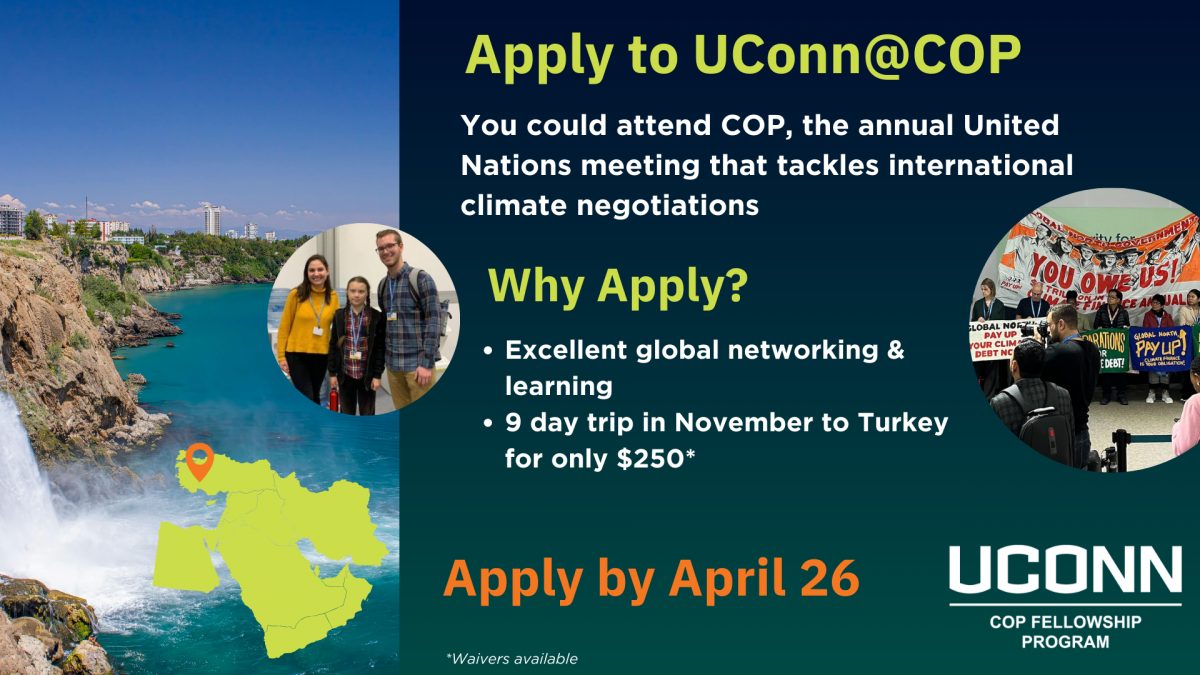
 Kelechi Uzobuife, a freshman SOI who is a PNB major involved in Stem Plus and the Pre-Med Society, describes her job as “promoting environmental success for residence halls and for the UConn community”. As an SOI for Northwest residence hall, she reflects on the impact she’s had on her residents. “Being able to already have an influence on some of the people in our residence halls and teaching them different things about sustainability through our events is such a great way to push that agenda of creating a cleaner space overall. Recently we have been giving out recycling bags for RecycleThon and I have seen people using them. That shows that even the little things can make such a difference. When doing the audits the past two weeks I noticed so many contaminants, and after a week I have seen such a huge improvement.” However, her childhood experience engaging with recycling is what drew her to sustainability. Kelechi shared that growing up she and her family would volunteer at a local soup kitchen. To raise money for resources and supplies, she and her family would recycle bottles. This served as a way to help others while also helping the environment.
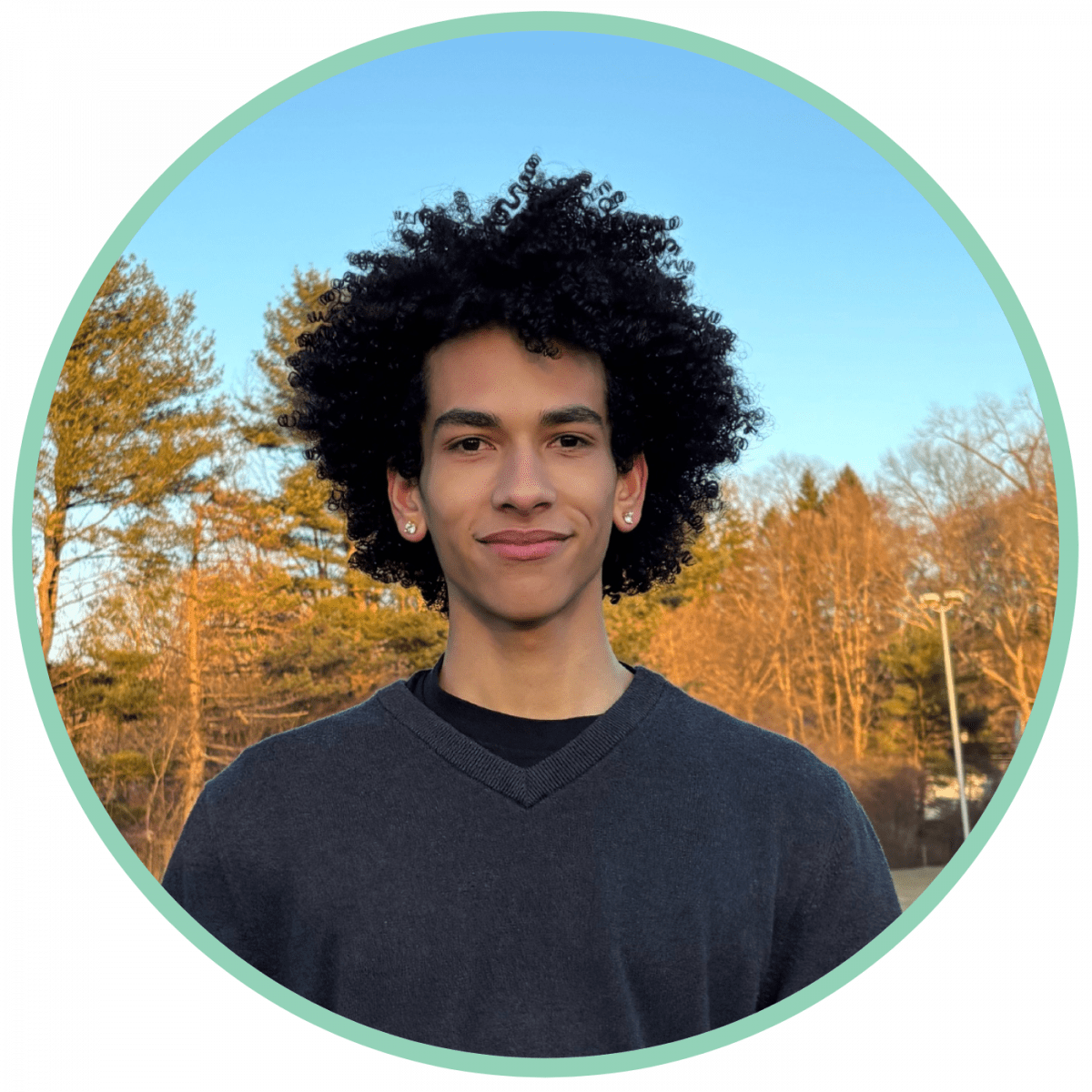 Student experiences are impacted by a variety of factors, including how their identities impact their perspectives. Junior Sustainability Intern and Truman Scholar nominee Brenny Alcantara who leads cleanup events and manages social media production at the OS says his sustainability journey has been influenced by his experience as an Afro Latino. He says his identity “…makes me much more aware of the social conventions that play into environmentalism. It gives people more perspective, flexibility, and enables people to problem solve in different ways. It helps me become more open-minded. Coming from Waterbury and Puerto Rico – both are disparities cities compared to cities around them. Both places are primarily composed of POC, which helps me understand that there is a system that lies underneath it all. It facilitates my ability to understand different perspectives and helps me use those perspectives to build a better team.”
 want to make sure I’ve included considerations on the impacts of minority populations and not just white ones. Our SOI activities are already rooted in inclusivity and are open to everybody.” For Judith, the welcoming atmosphere she fosters at her SOI events reflects how her identity informs the way she approaches her role. Judith explains her approach to the sustainability field as, “I think as a Black person you come by with an entirely different perspective. In the sustainability environmental field there isn’t a lot of Black or minority representation. So, you know that you’re going to be one of a few Black people in a white dominated space. I make sure that I am putting my best foot forward to make an impact and make significant decisions in what I do every day.” However, Judith is among many of our interns who consider their identity as a key factor to their perspective in the sustainability field.
 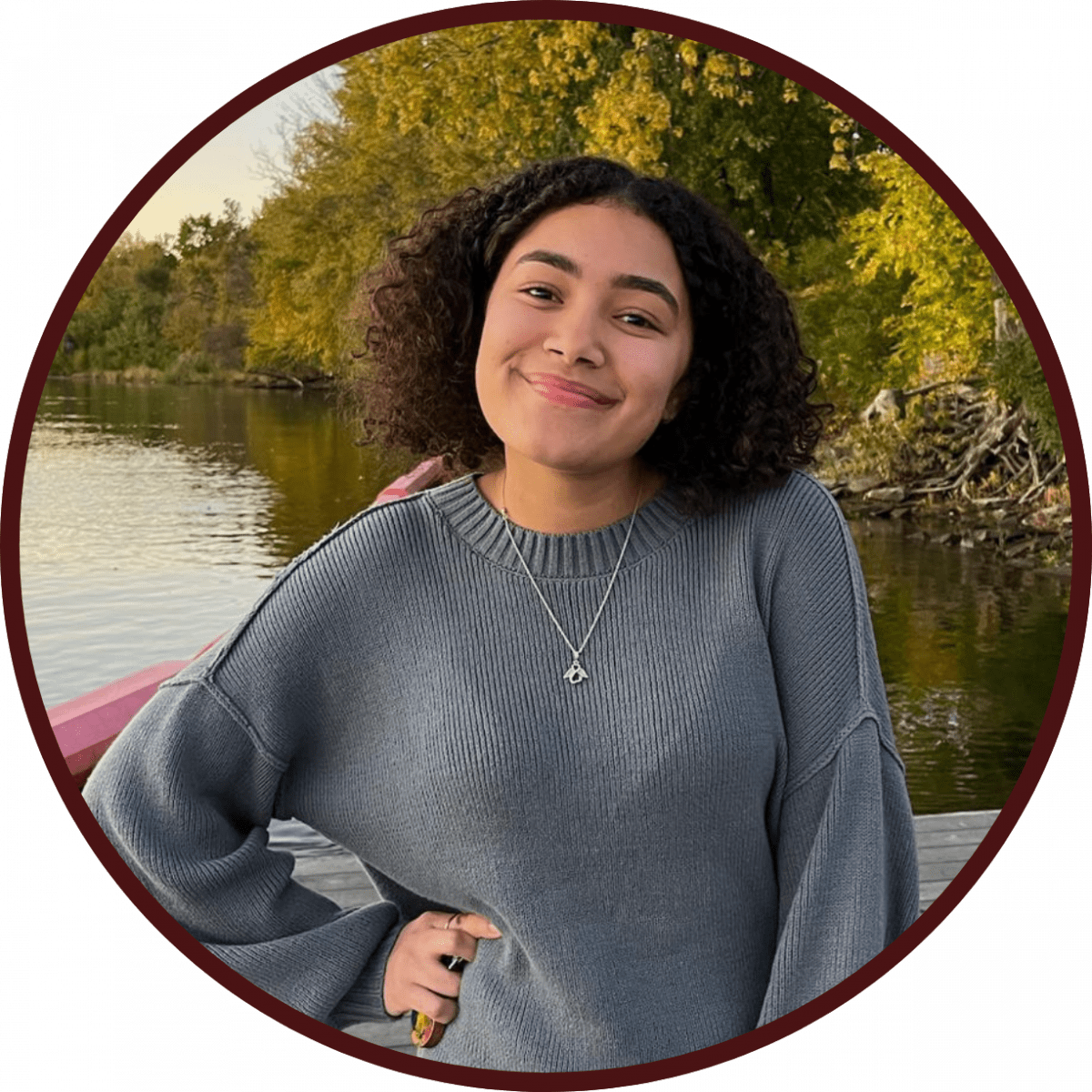 Emily Rodriguez, a sophomore SOI studying English on the Secondary English Education track who is an active member of Her Campus and an Ignite Fellow with Teach for America, further emphasizes the influences that her identity has on her perspective in sustainability and her goals as an SOI. As an Afro Latina, Emily shares, “…I have a goal, especially this semester, to teach others how people in marginalized areas are greatly impacted by climate issues… I live in New Britain, Connecticut, which is a marginalized city and is often impacted for extensive periods of time when there are severe weather conditions because of historic redlining and lower-quality housing. As we’ve had recent snowstorms and the upcoming months tend to expect a lot of rain, I want to educate others on the direct impact that it has on people living in underrepresented communities and who have limited resources in weather disasters. So, when taking on projects, I aim to focus on how I can represent students who look like me and come from underrepresented areas that are often overlooked in how they’re impacted by climate change and global warming”.
 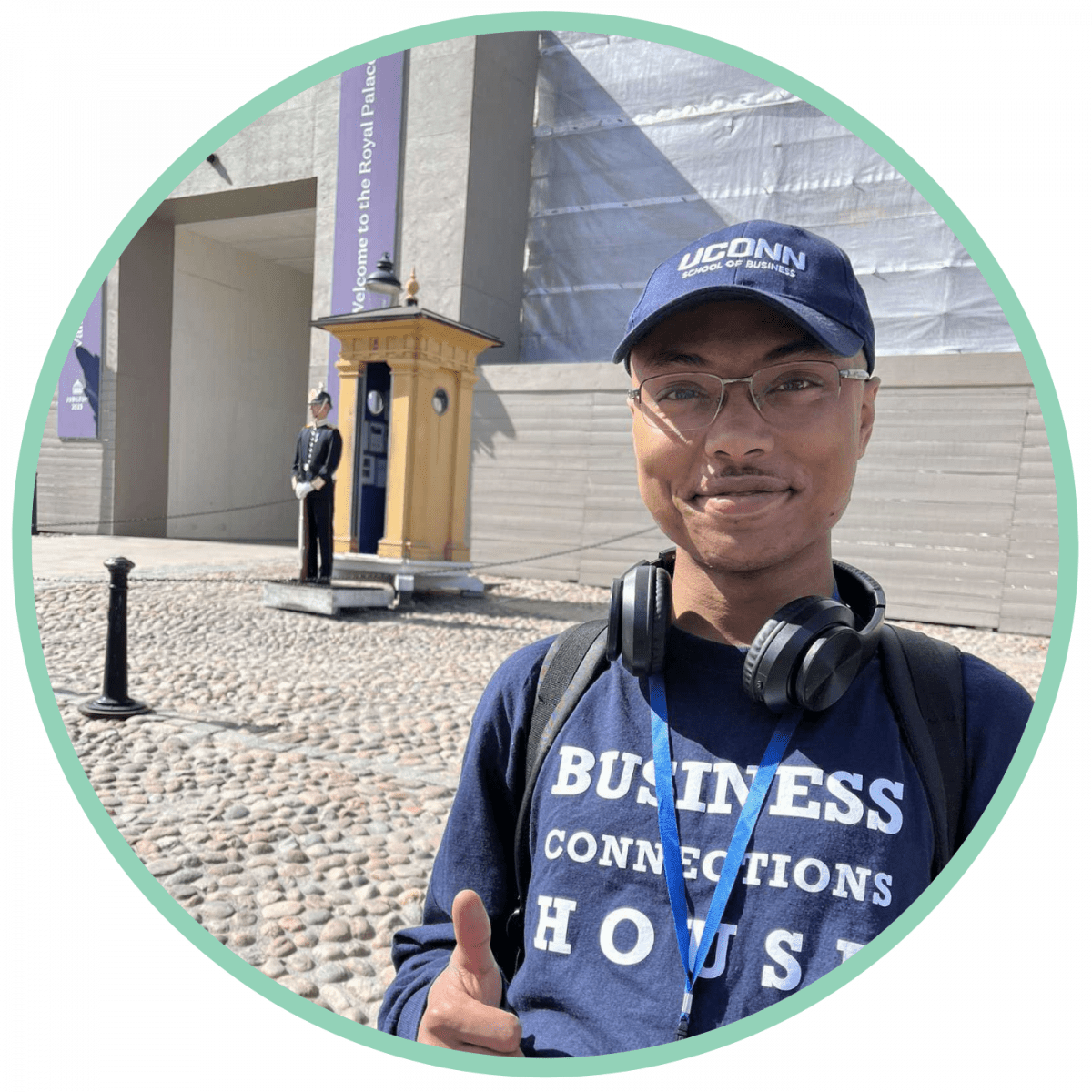 As someone who has embarked on many opportunities while at UConn as a Real-Estate and Urban Economics major, an active member of the UConn Consulting Group, Global Business Ambassadors, and an alumni of both the COP30 Fellowship and the Business Connections Learning Community, Aminieli has acquired a profound amount of wisdom, perspective, and skill in the sustainability field and in career development. These skills have helped him grow into a leader who has fostered innovation at the Office of Sustainability. Reflecting on one of his most meaningful contributions, Aminieli explains, “My first year the most common issues I talked about was the jargon and language we use in sustainability. When we use jargon, it might not be as accessible or relatable to people, even if the topics are relevant to certain demographics.” Aminieli’s advocacy for accessible language brought an overlooked disparity in the environmental field to light. As an African American and Tanzania East African, Aminieli’s roots growing up in both the north and south of the United States as well as living in Tanzania developed a different lens that challenged him to consider disparities when tackling sustainability.