As Climate Change becomes increasingly more apparent in our world through natural disasters and rising temperatures, developing nations are hit the hardest. Between the need to protect their citizens from climate disasters and the push to make their own NDCs and transition to clean energy, developing nations are at a disadvantage financially.
Article 9 of The Paris Agreement states that “Developed country Parties shall provide financial resources to assist developing country parties with respect to both mitigation and adaptation”. Last year, at COP29, the parties agreed on a new target of $300 Billion a year to be provided to developing nations to adapt to climate change. Additionally, it was agreed that $1.3 Trillion would be needed by 2035.
Thus, the topic of climate finance was on everyone’s mind entering COP30. On one hand, developing nations were positioned to demand the $1.3T and more to adapt to the climate crisis. However, The developed nations responsible for providing finance, such as the EU, UK, and Japan, have historically been unwilling to consider more ambitious financing targets, citing domestic fiscal pressures.
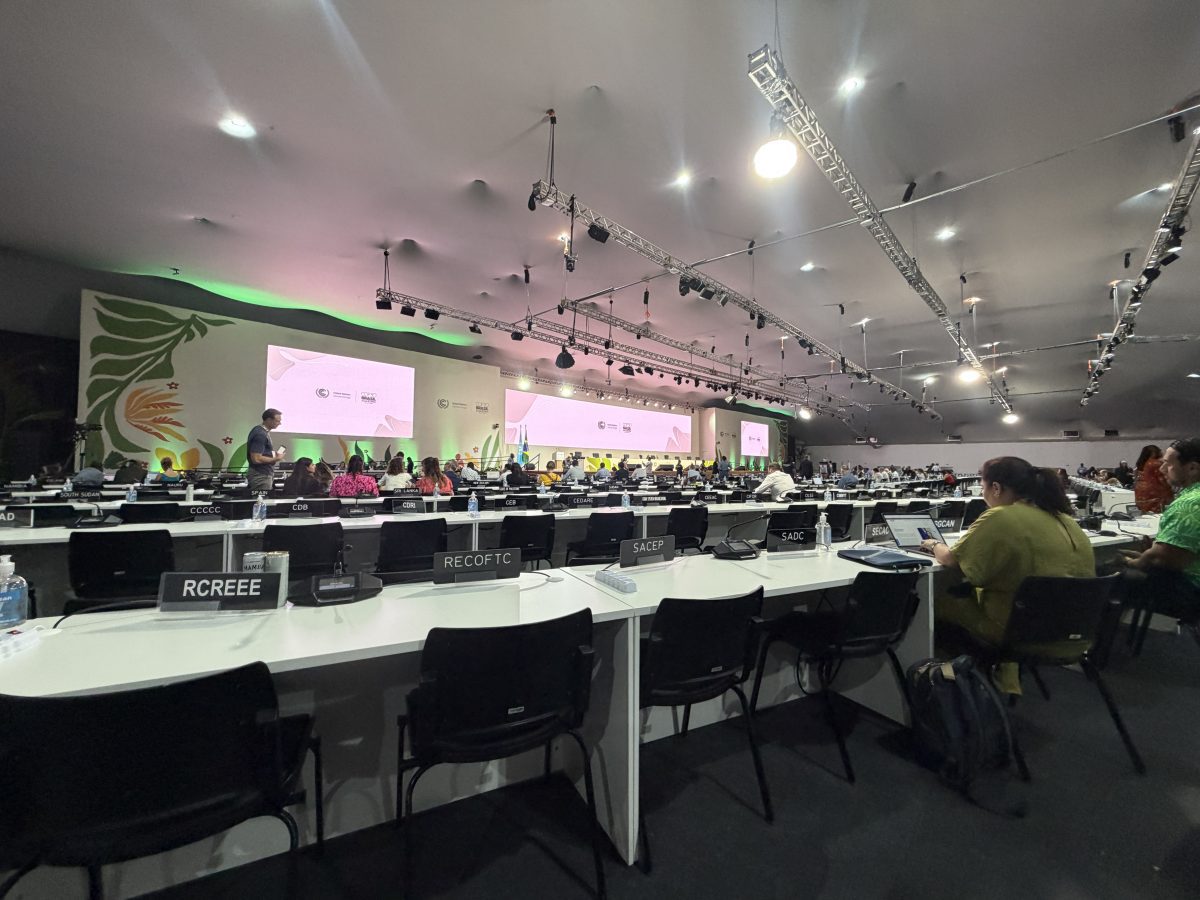
At the Plenary Session, I heard developing nations tell their stories alongside the demand for support. Most notably is Tuvalu and other island nations that are under risk of sinking completely underwater in the coming decades if climate action isn’t taken. Tuvalu, in particular, is the most urgent case. Standing no taller than 3 meters above sea level, some projections believe the nation will be flooded by 2050. At COP30, Tuvalu called for stronger mitigation efforts, increased climate finance, and ocean-based solutions.
I was also given the opportunity to dine with representatives from Pakistan, another developing nation increasingly under siege by climate change. From drought in agricultural centers to melting glaciers, Pakistan is another nation arguing for increased climate finance. Most notably, in 2022, a third of the country was underwater from a historical flood. 33 million people were impacted, over 1700 individuals passed, and there was an estimated $44 Billion USD in damages. This flood is only an example of one disaster occurring to Pakistan, and one of thousands that hit developing nations every year. The delegates talked about how nobody in their nation wasn’t affected by climate change, all while developed nations penny pinch and avoid responsibility.
 Pakistan contributes less than 1% to global greenhouse gas emissions. Tuvalu even less. Yet it is developing nations who suffer the most. Hearing the stories from across the globe, and even from indigenous people from our own country, was one of the most impactful experiences from the conference.
COP30 reminded me that to be in a developed nation is a privilege. To even attend COP30 is a privilege. It is our responsibility as the global north and as a major contributor to climate change to not only change our ways, but to ensure nobody is left behind in the process.
Claire Lawrence is a senior studying Applied Data Analysis and Public Policy.