The second half of COP30 flew by with a literal smoky haze of hope and action in the air.
Walking in on Thursday morning was surreal, as tensions were high and the environment around us clearly called for concrete climate action. I began the day with a discussion on how to maneuver access to climate finance. What surprised me was the use of creativity in their solutions– artists in the Northern Brazil region using their gifts to decode where the impacts of regional crises (agriculture, and land rights) could be supported by innovation hubs with marketing techniques that connect Green Financing Lenders from Banks to credible small-medium enterprises who didn’t initially have the toolkit to access funds without falling into severe debt.
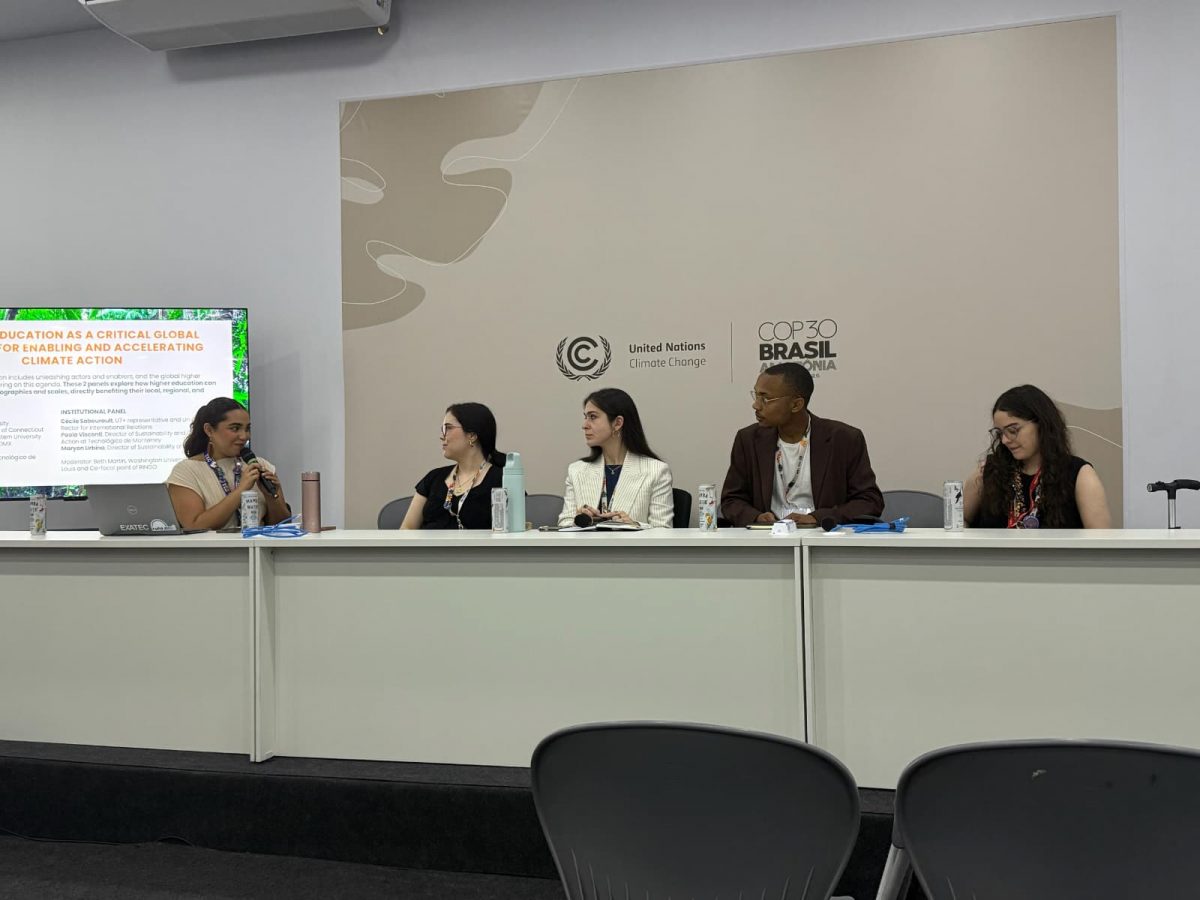 Afterwards, I had the honor to participate in the Higher Education as a Critical Global Partner for Enabling and Accelerating Climate Action panel alongside Valeria Soto (Tecnológico de Monterrey), Phoenix Boggs (Yale University), Javiera Cabezas Parra (Northwestern University), and Fernanda Muraira (Universidad Iberoamericana, Ciudad de México). We exchanged insights on unique ways youth have felt both empowered and faced barriers when getting involved in climate action. It was incredible to witness the administrators and delegates in the room break down their plans to combat those barriers.
Many concerns arose that institutional frameworks for adaptation are in the works but do not provide the institutional mechanisms for knowledge transfer to younger, future climate leaders; let alone the pre-existing disparities within marginalized groups across the Global North and South. The Commonwealth Youth Climate Change Network (CYCN) put together a statement calling for 1) Institutionalized youth participation in climate governance, 2) Scaled-up climate education and capacity building, 3) Sustainable finance and support for youth-led initiatives, and 4) Stronger pathways for youth inclusion in climate negotiations. I believe these are incredible steps, as so many young people, from the rivers of South America to the farms in the United States’ Midwest, possess the energy and creativity to innovate solutions in their local communities. They simply need institutional platforms, resources, or technical terminology to advance those solutions.
Around lunchtime, we gathered at a table with fellow university students from St. Louis, San Diego, Boston, and Storrs, Connecticut. Exchanging perspectives about how our communities fit into the context of the Climate Crisis. We learned about unique strategies to continue engaging and upskilling civil society members who are curious about climate action but don’t know how their specialties can contribute. Simultaneously, to our left and right, there was an outpour of delegates balancing the long queues for the Amazonia-inspired cuisine and doubling down on their nation’s target agenda items. Locally sourced fish and fresh-cut fries bore witness to the thunderous pounding of shift, right-click, and backspace buttons on keyboards that unlock promises of a better tomorrow. Every table spoke a different language, and yet the message was the same. The anticipation was harmonious and, just as I internalized these surroundings, a man in a yellow shirt walked up to our table and said, “Fogo.” Bug-eyed we sat, as this word was not in the travel booklet. We cautiously followed a herd of what looked like thousands of environmental change agents to safety as a section of the Pavilions in the Blue Zone caught on fire. Thankfully, no one was hurt, though all 1000+ of us were reminded of the importance of building climate-resilient infrastructure in our buildings and in our homes. We witnessed the environmental manifestation of urgency for implementation.
While policies are crafted, we must enable the technical education and communication of these systems to advance equitable and healthy conditions for our communities.
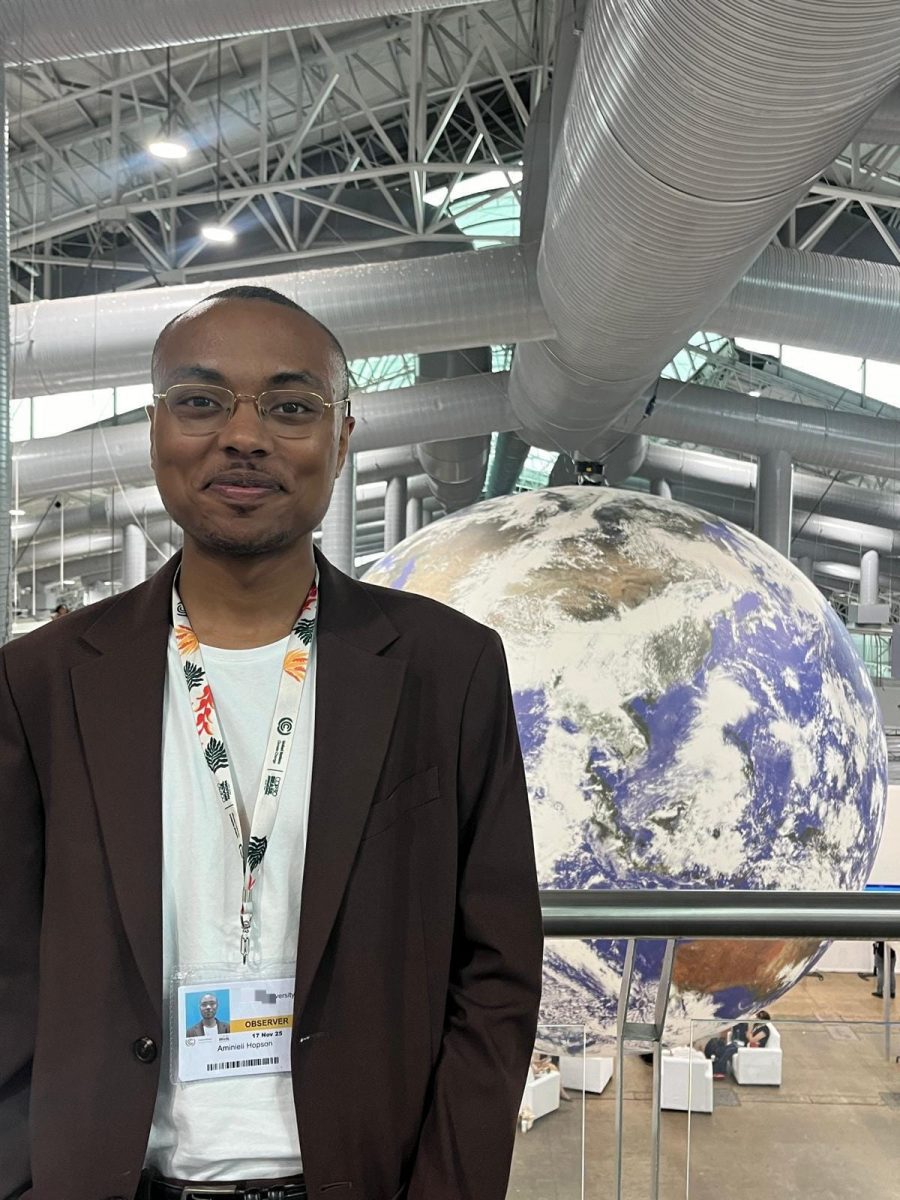
The next day, we were allowed to visit the Green Zone, where I reunited with a Swedish delegate who shared how interdisciplinary his work has been. By his side was another from South Korea who was excited to see students participating. They both agreed that, while this work can be intense, it pays off to uplift voices and continue learning with each assignment. From the perspective of being a student in Real Estate, this means remaining nimble enough to learn about risk & regulation from the perspective of people and planet. Knowing where to invest so that not only communities but also agricultural ecosystems and land can see beneficial returns, avoiding the degradation that leads to unstable construction sites, food deserts, and potential increases in housing disparities.
COP30 may not have delivered on all its promises, but it certainly had the spirit to empower this generation’s solution-makers with the right dots to connect. The first step is converting the work from pen to action.
Aminieli Hopson is a senior studying Real Estate and Urban Economics.