Attending COP30 was an invaluable and deeply insightful experience. I had originally anticipated learning more about climate negotiations, the international diplomacy process, and the different ways climate awareness can be advanced—whether through higher education institutions mobilizing university students, as our very own UConn group presented; through nonprofits contributing to climate action; or through scientists explaining the evolving state of climate science. What I was most pleasantly surprised to take away, however, was a far more humanistic understanding of all this—an opportunity to connect with the people behind these frameworks.
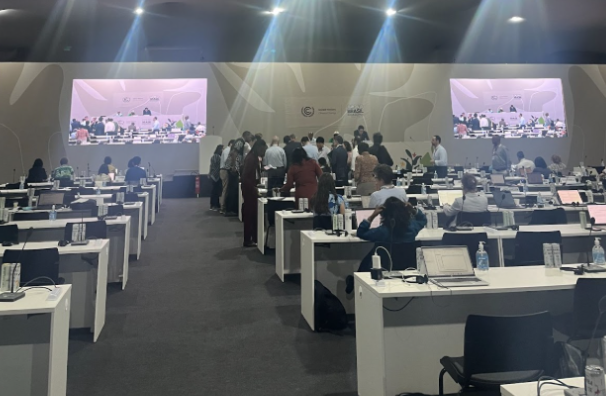 In the news, we often hear about the negotiations, which countries are willing or unwilling to compromise, and what transpired the previous day. What we rarely consider is the sheer number of individuals involved behind the scenes—from those engaging directly in diplomacy, to the people handling logistics, to the reporters and bloggers who communicate the events in Belém to the rest of the world. Two experiences in particular helped me humanize this entire process.
First, on Day 4 of UConn@COP, the venue experienced a fire caused by a short circuit, prompting a surprisingly organized and coordinated evacuation before the day’s events had concluded. Shortly afterward, a few fellows and I went to a nearby café, where we happened to sit next to a negotiator from South Korea. It was fascinating to hear from someone involved in the actual nitty-gritty of negotiations—she mentioned that talks had gone quite late the previous night, which was why she had been given permission to work remotely that day. We watched her complete official administrative paperwork on her laptop, the kind required of negotiators representing their national ministries and agencies.
Later that night, we ended our day at an Indian-inspired Brazilian restaurant known for its vegan and vegetarian options. Throughout the entire trip, the COP badge served not only as a practical tool (especially when we forgot someone’s name at the venue) but also as a conversation starter everywhere we went. That night, a woman from Germany introduced herself to us as a climate psychologist. It was the first time I had heard the term. She invited us to follow her blog stream on WhatsApp, where she posted psycho-analyses of the key players in the negotiations—observing their tone of voice, facial expressions, demeanor, and the visible fatigue that came from late-night sessions, and discussing how these human factors shaped negotiation outcomes. It was a role I had no idea existed, and yet here she was—someone who had found a unique niche in the climate space and was actively supplying a demand I hadn’t realized was there.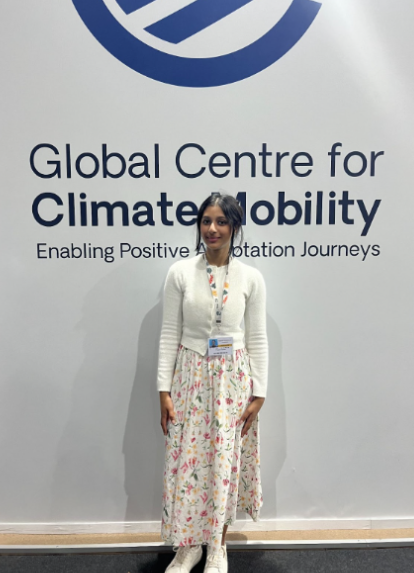
Attending COP30 left me with a strong sense of humility as I left Belem. It was inspiring to see the sheer number of people needed to put in effort to stop climate change–from the climate psychologists to the analysts drafting late-night briefs to translators at the COP venue to grassroots community organizers spreading the word–it really does take a village. I learned just how important it is to have this many people come together and form a collective, which is a powerful reminder that climate action is indeed a collective effort.
Pranavi Rebala is a senior studying Mathematics, Economics, and Urban & Community Studies.