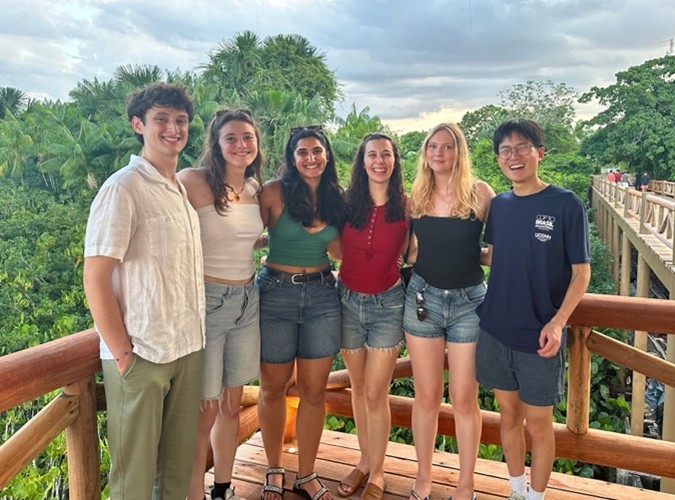
 As I reflect on COP30, I keep coming back to one central idea: climate work is about people. When I say people, I do not mean it in the Bill Gates way. I mean people in the human sense. People with stories, cultures, memories, and lived experiences that shape how they move through the world. People whose lives are touched by climate change long before it ever becomes a headline or a negotiating point. People who carry knowledge that does not come from textbooks but from daily life, from land, from history, from relationships. These are the people whose experiences define climate reality, far beyond the technocratic lens that tries to manage suffering instead of transforming the systems that create it. One of the most meaningful parts of COP30 was realizing how my own lived experiences shape the way I see the world and the way I understand this crisis. The values I grew up with, the communities I have been part of, and the moments in my life when I felt both supported and unheard all influenced how I responded to what I saw in Belém. In many ways, COP30 made me more aware of how personal climate work is. It touches everything from where we come from to what we care about to how we show up for each other.
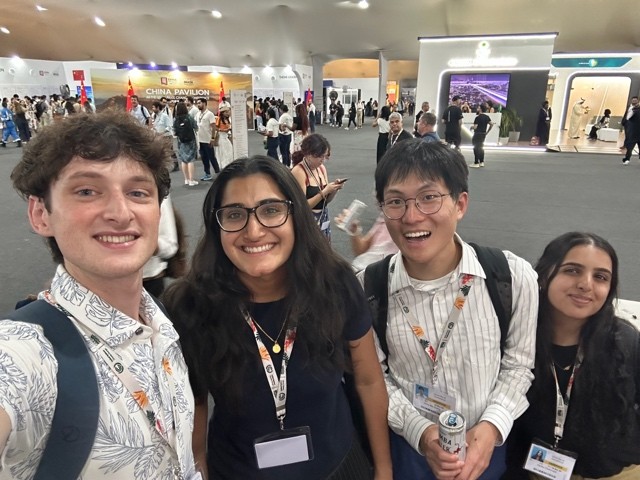
 Our cohort played a huge role in shaping that understanding. We came from different places and were drawn to different aspects of climate work. Some of us focused on justice, others on technology, international systems, or environmental health. We had different academic backgrounds, cultural perspectives, and personal motivations. What made the experience powerful was the way we all brought our full selves to it and I learned how climate change intersects with identity in ways I had not fully appreciated before. COP30 also taught me that lived experience is not something separate from climate work. It is part of what shapes climate justice, resilience, and policy. People who live through storms, displacement, heat, or pollution carry knowledge that cannot be found in reports or negotiation texts. People whose lives intersect with social, economic, and cultural challenges understand the complexity of transition in ways that academic theory alone cannot capture. Any meaningful path forward has to center those voices and bridge the gap between policy and lived reality. Looking ahead, I want to build spaces where people feel heard and supported. I want to work in ways that respect different perspectives and value the power of community. I want to make room for lived experience in every climate conversation I am part of, whether big or small. COP30 reinforced that climate action is not only a global responsibility, but also a human one, shaped by the connections we make and the communities we build. That is the lesson I am taking with me, and the one I hope to honor moving forward.
Andy Zhang is a senior studying environmental economics and environmental sciences.