


Web cookies (also called HTTP cookies, browser cookies, or simply cookies) are small pieces of data that websites store on your device (computer, phone, etc.) through your web browser. They are used to remember information about you and your interactions with the site.
Session Management:
Keeping you logged in
Remembering items in a shopping cart
Saving language or theme preferences
Personalization:
Tailoring content or ads based on your previous activity
Tracking & Analytics:
Monitoring browsing behavior for analytics or marketing purposes
Session Cookies:
Temporary; deleted when you close your browser
Used for things like keeping you logged in during a single session
Persistent Cookies:
Stored on your device until they expire or are manually deleted
Used for remembering login credentials, settings, etc.
First-Party Cookies:
Set by the website you're visiting directly
Third-Party Cookies:
Set by other domains (usually advertisers) embedded in the website
Commonly used for tracking across multiple sites
Authentication cookies are a special type of web cookie used to identify and verify a user after they log in to a website or web application.
Once you log in to a site, the server creates an authentication cookie and sends it to your browser. This cookie:
Proves to the website that you're logged in
Prevents you from having to log in again on every page you visit
Can persist across sessions if you select "Remember me"
Typically, it contains:
A unique session ID (not your actual password)
Optional metadata (e.g., expiration time, security flags)
Analytics cookies are cookies used to collect data about how visitors interact with a website. Their primary purpose is to help website owners understand and improve user experience by analyzing things like:
How users navigate the site
Which pages are most/least visited
How long users stay on each page
What device, browser, or location the user is from
Some examples of data analytics cookies may collect:
Page views and time spent on pages
Click paths (how users move from page to page)
Bounce rate (users who leave without interacting)
User demographics (location, language, device)
Referring websites (how users arrived at the site)
Here’s how you can disable cookies in common browsers:
Open Chrome and click the three vertical dots in the top-right corner.
Go to Settings > Privacy and security > Cookies and other site data.
Choose your preferred option:
Block all cookies (not recommended, can break most websites).
Block third-party cookies (can block ads and tracking cookies).
Open Firefox and click the three horizontal lines in the top-right corner.
Go to Settings > Privacy & Security.
Under the Enhanced Tracking Protection section, choose Strict to block most cookies or Custom to manually choose which cookies to block.
Open Safari and click Safari in the top-left corner of the screen.
Go to Preferences > Privacy.
Check Block all cookies to stop all cookies, or select options to block third-party cookies.
Open Edge and click the three horizontal dots in the top-right corner.
Go to Settings > Privacy, search, and services > Cookies and site permissions.
Select your cookie settings from there, including blocking all cookies or blocking third-party cookies.
For Safari on iOS: Go to Settings > Safari > Privacy & Security > Block All Cookies.
For Chrome on Android: Open the app, tap the three dots, go to Settings > Privacy and security > Cookies.
Disabling cookies can make your online experience more difficult. Some websites may not load properly, or you may be logged out frequently. Also, certain features may not work as expected.
Internship Opportunities
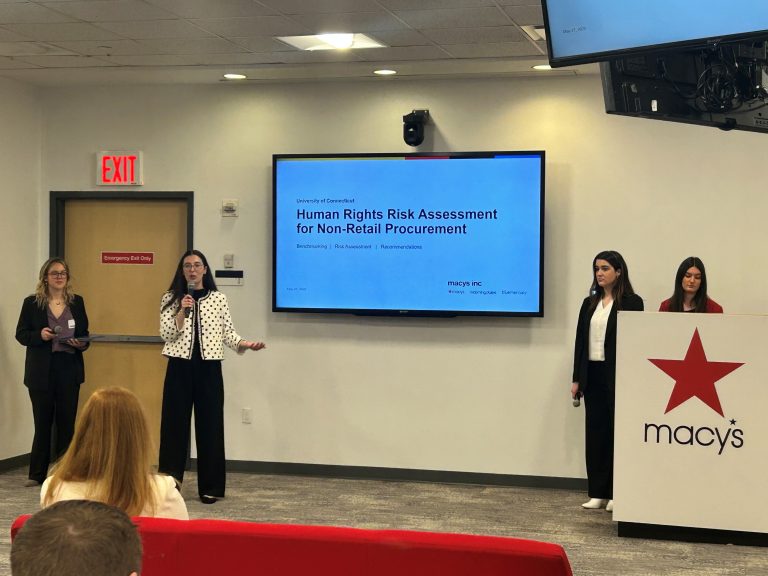
Undergraduate students work as interns at the Office of Sustainability to provide leadership, collaboration and advocacy for sustainability at UConn. The 10 hour per week positions help enact the Office's critical university programs. Interns host campus sustainability engagement events, carry out UConn's strategic sustainability plans, and research best environmental practices to improve sustainability at UConn.
In collaboration with ResLife, there is a Sustainability Outreach Intern (SOI) in each residential hall that conducts sustainability related programming and educational activities for their residents. SOIs act as liaisons between the Office of Sustainability and UConn's resident students. There are SOIs hired for every hall each year and they work 5 hours per week. This position was known as an EcoCaptain up until Fall 2025.
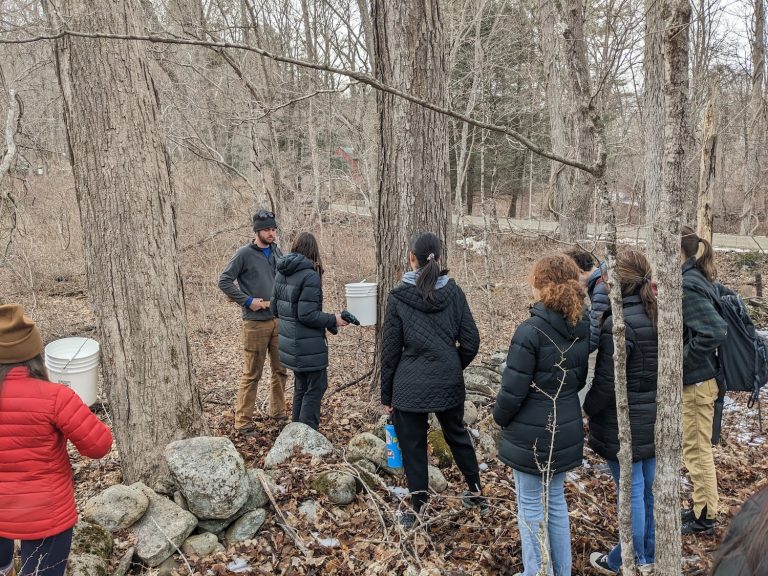
The Office of Sustainability hires one Regional Sustainability Intern per regional campus to lead and support local sustainability efforts. During their 10 hour per week shifts, these interns engage their campus communities by raising awareness for sustainability initiatives and developing and executing environmental projects in their surrounding areas. Regional interns also help conduct greenhouse gas emissions inventories at their respective campuses.
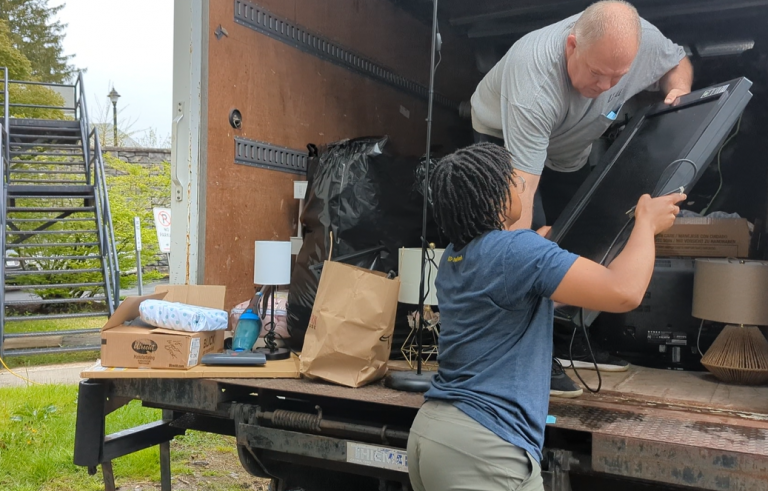
Thrift Den interns are responsible for the day-to-day operation of the Thrift Den. Interns manage clothing donation intake, shop space organization, and help fellow students "shop" for one free item each week. Thrift Den interns also assist in hosting sewing workshops and sewing hours to empower students to engage in sustainable fashion practices.
Since 2003, the OS’s practical internships have enabled undergraduate students to:
OS interns gain project management and teamwork skills in an office environment. Their job duties and responsibilities, and performance expectations, are similar to those of entry-level employees, such as college graduates, working in business and industry, non-profit organizations or public sector jobs.
Bolstered by their OS work experience, many interns have served as elected presidents and officers of environmental student groups and organizations, ranging from EcoGarden to Engineers Without Borders and USG. A few interns have been captains of UConn varsity and club sports teams while others have been nominated for (and even won) the University’s most prestigious student leadership awards.
Over the past 16 years, OS interns have won a multitude of national scholarships, including UConn's first Rhodes Scholar, 4 national Udall/Environmental Policy scholarships and 2 Udall Honorable Mention scholarships. Dozens of others have been among the select few students nominated annually by UConn for this coveted, national award. Our interns have also won other scholarships and fellowships during and after their UConn years, based on both their academic excellence and OS work experience.
Recent OS interns are attending and working towards graduate degrees, or have received graduate degrees, in a range of environmental disciplines from programs here at UConn as well as Yale, Columbia, Brown, Duke, Cal Santa Barbara, Vermont Law School, Colorado (law school), Oregon State and Imperial College of London.
Former OS interns currently hold or have held positions, ranging from entry level to management, at United Natural Foods, Inc., Waste Management, Inc., Sunlight Solar Co., the CT Green Bank, the Environmental Defense Fund, Housatonic Valley Association, Siemens Energy, Inc., Fuss and O’Neill, BL Company, GZA, UTC, Northeast Utilities (Eversource), Dominion Energy, and the Hampshire Council of Governments, plus financial services firms such as HAIG in Boston and RBS in Stamford. Past interns have also held various positions with the CT DEEP, the Peace Corps, and the Student Conservation Association after leaving UConn.
Since 2003, the OS’s practical internships have enabled undergraduate students to: